
Mother with specific antibody deficiency advocates for vaccines
September 11, 2025

The more you understand about primary immunodeficiency (PI), the better you can manage it. Learn about PI diagnoses and treatment options.

Living with primary immunodeficiency (PI) can be challenging, but you’re not alone—many people with PI lead full and active lives. With the right support and resources, you can, too.

Be a hero for those with PI. Change lives by promoting primary immunodeficiency (PI) awareness and taking action in your community through advocacy, donating, volunteering, or fundraising.

Whether you’re a clinician, researcher, or an individual with primary immunodeficiency (PI), these resources will help you advance the field. Get details on surveys, grants, and clinical trials.
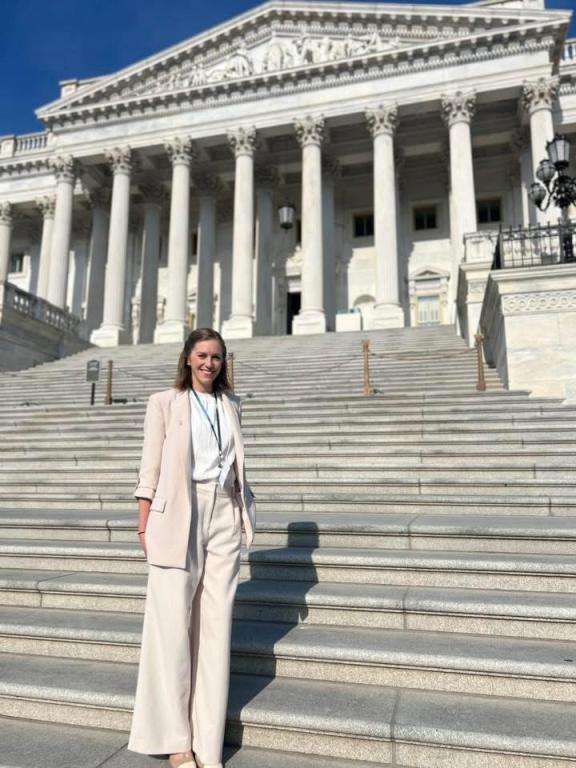
Jennifer Harry sought a whooping cough (pertussis) vaccine booster in her mid-20s when she planned to visit a family member’s new baby. Although she had received her routine vaccinations as a child, Harry knew that the booster offered an added layer of protection for the infant, who was too young for vaccines. Six months later, Harry contracted pertussis, a highly contagious respiratory infection.
“The pertussis was treated with antibiotics, but that is an infection that lingers long, even in a healthy person. I coughed for three months straight and had excruciating pain in my ribs from the inflammation,” said Harry.
The vaccine didn’t work for Harry because she has primary immunodeficiency (PI) and cannot create antibodies to fight infections. She learned of her PI diagnosis a few months after the illness. When her immunologist told Harry she had a PI called specific antibody deficiency (SAD), the diagnosis not only explained why she caught pertussis, but also brought into focus a lifetime of poor health.
A childhood of unusual respiratory and sinus infections led to even worse illnesses as Harry attended college and mingled with thousands of people. Severe, frequent infections “spiraled out of control,” said Harry, with her illnesses leading to emergency room visits within 24 hours.
After earning her college degree and resettling in her hometown of New Orleans, Harry connected with a primary care provider who agreed to evaluate her symptoms. Persistently swollen lymph nodes prompted testing for lymphoma, including biopsies and appointments with ear, nose, and throat specialists. She underwent surgery to remove tonsils so swollen that she couldn’t swallow. When the onslaught of infections moved from one place to another in her body, the provider sent Harry to an immunologist.
“The immunologist heard my health history, and she said, ‘I know exactly what is going on here,’ and she was right,” said Harry, who was diagnosed with SAD at age 25 by the immunologist.
Harry’s immunologist referred her to the Immune Deficiency Foundation (IDF) for more information about her condition. At IDF, Harry found community, education, and an opportunity to spread awareness about PI. She has participated in IDF Advocacy Day in Washington, D.C. for several years, sharing her story with elected officials to help them understand PI and the need for legislation that improves the quality of life for patients.
“I was always a really shy, quiet person who didn't speak much, and having to advocate for myself so much through the PI process and then learning about PI and what it's like living with it and what we need to keep us safe has really helped me find my voice as an adult,” said Harry.
Most recently, Harry met with staff from the office of U.S. Senator Bill Cassidy (R-La.) to express her support for vaccines and explain why widespread vaccination is critical for the health of those with compromised immune systems. When enough people in a community vaccinate, it’s difficult for a particular disease to spread from person to person. That threshold depends on the disease and the vaccine, but encouraging as many people as possible to get vaccinated means that, in many places in the U.S., diseases like measles, mumps, polio, and chickenpox can’t spread easily. Unlike others who can expect to be protected after getting a vaccine, many people with PI don’t respond to vaccines well and rely on their loved ones and community being vaccinated so that they never come in contact with a disease to begin with.
Raised in an environment where vaccines were a standard of care, Harry said her mother used to tell stories about how the measles vaccine provided peace of mind when it was introduced in the 1960s.
“I can remember my mom talking about the miracle that was the measles vaccine and how relieved their parents were when it came out, and how they got their shot at school, and I keep that story in the back of my head,” said Harry.
“When I got my PI diagnosis, it just really reinforced what I had already known for so long, that vaccines keep people safe, keep people from losing their loved ones, and prevent them from developing long-term complications. And I think people understood that at a baseline—until the COVID vaccine came out, and the misinformation became so mainstream.”
As a person with PI, the wife of a physician who works in urgent care, and the mother of a 1-year-old just starting preschool, Harry said her family is conscientious about vaccines. Sometimes she, her husband, and child avoid large extended family gatherings where some members are not vaccinated, which strains family relationships.
“To see people cheering for the routine childhood vaccine series to be taken apart at the seams right now, while having a young child who’s not even old enough to complete her routine vaccinations, and a spouse who works directly with infectious diseases in our community, is really scary,” said Harry.
IDF has always advocated for vaccines, but the topic has risen to the forefront over the last several months. Federal health officials in the Trump administration have upended research, access, and decision-making related to vaccines as they dismantle vaccine policy and roll back recommendations that scientists have spent decades building to keep the public safe from disease.
In August, U.S. Secretary of Health Robert F. Kennedy Jr., instructed the Centers for Disease Control and Prevention (CDC) to restrict access to the COVID-19 vaccine. Currently, the vaccine is only approved for those aged 65 or older or for those younger than 65 with at least one underlying condition. That means healthy people under the age of 65 may face difficulty getting the vaccine, even with a prescription from their doctor. So far, in some states, the vaccine is accessible in pharmacies, and in others, it’s not.
“There's so much confusion that, in real-time practice, people are worried about the liability of giving the vaccine. Am I allowed to give it to this person now because the approvals have changed? I know in my home state there's already some very real impacts from the COVID vaccine decision, specifically,” said Harry.
Attacking childhood vaccines is also on Kennedy’s agenda. The Advisory Committee on Immunization Practices (ACIP), the CDC’s vaccine advisory panel, which is now composed of all Kennedy appointees, scrutinized the timing of the measles, mumps, and rubella (MMR) vaccine. The panel also questioned the inclusion of the varicella vaccine with MMR, why the HepB vaccine is given to newborns, and the measles vaccine ingredients.
Harry said the movement toward eliminating vaccines is disheartening.
“It almost feels like a slap in the face that vaccine access is threatened for things that we can prevent. My husband went through hell and back with the pandemic, treating patients, and like many of the others who worked on the frontlines during that time, he saw really awful things,” said Harry.
“To think of going through that with measles or pertussis or polio, and to see that suffering when it’s preventable, it’s a really tough pill to swallow for our family, for both my daughter’s safety and for what my husband put his life on the line for in 2020. It’s a very personal issue for us all the way around at our house.”
When government officials in charge of health in the U.S. make decisions based on personal opinion rather than science and facts, it’s the citizens who will pay the price, especially those with less income. Harry said her family has the means to get the vaccines in other states if needed, but others don’t.
“I envy the states that are banding together and making their own guidelines. I don’t think Louisiana will be one to join them soon. With our family, truly, the worst-case scenario is that we will have to go out of state to keep my daughter on her vaccine schedule, but we are an outlier. Not every family has the resources to do that,” said Harry.
“We really do rely on the federal government to do the right thing. There’s such a high rate of poverty in Louisiana that free, easy access is the only way that families in our state will have access to vaccines.”
Federal health officials prey on new parents’ fears about vaccines and spread misinformation in an effort to do what’s best for themselves, not families, said Harry.
“If we're looking for evidence that vaccines save lives, all we have to do is look at the life expectancy of children since the introduction of vaccines. The fact that we don't have childhood graves from kids that died of measles and polio and pertussis in the 80s and 90s and 2000s, and the fact that there are diseases on the vaccine schedules that are so rare that parents have never heard of them is because these vaccines have been so effective,” said Harry.
Harry said she understands the fear and trepidation that new parents face when deciding to vaccinate their children. Unlike generations in the past, young parents today are bombarded with social media posts that have algorithms that feed into their anxieties about vaccines. As a new mother, Harry could see how the posts affected her and said they amplify confusion when new parents are trying to make important decisions.
Instead of turning to social media for answers, parents should seek out a pediatrician with whom they can have an open conversation, said Harry. Parents need to be able to ask questions about vaccines without shame, and know that they are getting honest, data-driven answers.
“Find somebody that you trust and feel comfortable with. Maybe not every doctor is going to be the perfect fit for every patient, personality-wise. So find somebody that is really good at what they do and is really knowledgeable and that you feel comfortable with personally, so that you can ask those questions to a qualified individual,” said Harry.
“I think the only way that we get past this and start working back towards a better community understanding of these issues is by using the no-judgment approach of welcoming people back in and asking, ‘How do we help make you feel more comfortable with this again?’”



Receive news and helpful resources to your cell phone or inbox. You can change or cancel your subscription at any time.