
The foundation's early years: Dr. Michael Blaese
December 02, 2025

The more you understand about primary immunodeficiency (PI), the better you can manage it. Learn about PI diagnoses and treatment options.

Living with primary immunodeficiency (PI) can be challenging, but you’re not alone—many people with PI lead full and active lives. With the right support and resources, you can, too.

Be a hero for those with PI. Change lives by promoting primary immunodeficiency (PI) awareness and taking action in your community through advocacy, donating, volunteering, or fundraising.

Whether you’re a clinician, researcher, or an individual with primary immunodeficiency (PI), these resources will help you advance the field. Get details on surveys, grants, and clinical trials.
The Immune Deficiency Foundation celebrates the life of Dr. Michael Blaese, a leading primary immunodeficiency expert, pioneer in gene therapy, and close friend of the foundation. Blaese passed away on November 26, 2025. The following profile was first published in the Spring 2023 Advocate newsletter and is being republished online in honor of his monumental contributions to the PI community.
As a leading researcher and physician in immunology at the National Institutes of Health (NIH) in Bethesda, Maryland, Dr. Michael Blaese treated patients with primary immunodeficiency (PI) for 33 years, beginning in the late 1960s. About an hour away at Johns Hopkins University in Baltimore, Maryland, Dr. Jerry Winkelstein, a pediatric immunologist/allergist, also specialized in patients with PI. Winkelstein often referred patients to Blaese, and the two colleagues became close friends.
In the late 1970s, Winkelstein began treating a little boy with X-linked agammaglobulinemia (XLA) named John Boyle. In 1980, his mother, Marcia Boyle, established a nonprofit—the Immune Deficiency Foundation (IDF)—to help families with PI, and Blaese appreciated the effort.
“There was a real lack of a support system for people with these rare diseases. Most of these folks have never even heard of what their children had, and most doctors didn’t know a darned thing about it either, and that was certainly the experience of what I had at the NIH,” said Blaese.
“When IDF was set up, I was very enthusiastic about it. It gave us some place patients could go to realize they were not the only ones with this rare problem. There were other people who were concerned about them, who they could talk to, and they could meet other parents.”
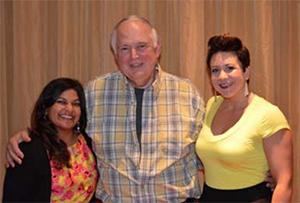
When the foundation asked Blaese, then-director of the National Human Genome Research Institute (NHGRI) at NIH, to speak at national conferences on topics related to PI, he gladly accepted the invitation. A global expert in PI, Blaese specialized in Wiskott-Aldrich syndrome (WAS). Along with his team, he performed the world's first gene therapy treatment on two girls with adenosine deaminase severe combined immunodeficiency (ADA-SCID) in 1990.
At the conferences, Blaese spoke on topics such as the shortage of immunoglobulin (Ig), a biologic essential for the treatment of PI patients; bone marrow transplant and gene therapy; treatments for patients with certain kinds of PI like SCID and WAS; and, most recently, provided a COVID-19 update presentation online.
Beginning in 2000, after his departure from NIH, Blaese served as the medical director of IDF for three years, and he served on the IDF Medical Advisory Committee. In 2022, IDF named the grant that funds the highest-ranking proposal for patient-centered research on PI after Blaese. The inaugural IDF Michael Blaese Research Grant Award went to Dr. Joud Hajjar to support research on the gut microbiome in patients who have common variable immunodeficiency (CVID), the most common PI.
Blaese said the foundation's role is integral to the PI community.
“It’s scary when you get the diagnosis of this disease you’ve never heard about, or that your child is dying because of it. When you have the resources provided by IDF, you realize you’re not the only person in the world who is dealing with this. You can talk to people who are dealing with this, and it gives you reassurance,” said Blaese, who is 84 and now retired.
“There are a lot of people I took care of that really bonded with other families who are going through the same stuff. Their own families don’t understand what’s going on and I think that’s one of the great advantages of IDF—you can find a community of like-minded people out there.”

Receive news and helpful resources to your cell phone or inbox. You can change or cancel your subscription at any time.