
Kids Korner: How Ig infusions help people with PI stay healthy
May 20, 2026

The more you understand about primary immunodeficiency (PI), the better you can manage it. Learn about PI diagnoses and treatment options.

Living with primary immunodeficiency (PI) can be challenging, but you’re not alone—many people with PI lead full and active lives. With the right support and resources, you can, too.

Be a hero for those with PI. Change lives by promoting primary immunodeficiency (PI) awareness and taking action in your community through advocacy, donating, volunteering, or fundraising.

Whether you’re a clinician, researcher, or an individual with primary immunodeficiency (PI), these resources will help you advance the field. Get details on surveys, grants, and clinical trials.
Living with a primary immunodeficiency, or PI, means your body needs extra help to stay healthy. Many people with PI receive immunoglobulin, or Ig, infusions. But what do these infusions do, and why do people with PI need them?
Inside a person’s body, there is a security team called the immune system working to keep them healthy. The immune system has different parts that work together to fight off anything that might make you sick.
One of the most important parts of the immune system is called a B cell. B cells make antibodies, also called immunoglobulins. These antibodies act like guards throughout the body. They find and tag germs like viruses, fungi, and bacteria so that other parts of the immune system can kill them.
The body makes different types of antibody guards, and each type protects a specific area. IgM antibodies protect blood and body fluids. IgG antibodies travel through the blood to find germs. IgA antibodies guard places where the body makes saliva, tears, and mucus, like the mouth, nose, lungs, and intestines.
If you have been diagnosed with a PI like common variable immune deficiency (CVID) or specific antibody deficiency (SAD), your body doesn't have enough antibodies. Sometimes, you have enough antibodies, but they just don’t work well.
Without enough working antibodies, your body can't kill germs that get inside. The germs grow and multiply. This is when you get sick. You might feel tired, have a fever, a sore throat, or a cough. Your ears might hurt, or your chest or stomach might feel bad. When this happens, your doctor calls it an infection. Sometimes, infections are mild, like a cold. But others can be serious and make a person very sick.
If your body can't make enough antibodies, you can borrow them from other people's blood! This borrowed medicine is called Ig.
An Ig infusion gives your body antibodies from other people to fight off germs. During an infusion, a nurse or other grown-up puts one or more needles into your body and tapes them in place. Then, the medicine with the antibodies flows through the needle into your body.
Some people get infusions through an IV, which goes into a vein in your arm. This is called IVIG, which stands for intravenous immunoglobulin. Others get infusions just under their skin. This is called SCIG, which stands for subcutaneous immunoglobulin.
Once the borrowed antibodies enter your body, they help you stay healthy. They look for germs to tag in your blood and tissues. With these borrowed guards, you get sick less often.
But, you have to keep borrowing antibodies regularly. Most people need infusions at least once a month. This is because your body uses up or breaks down the borrowed antibodies over time. People with PI need regular infusions to keep their antibody levels high enough to fight off infections.
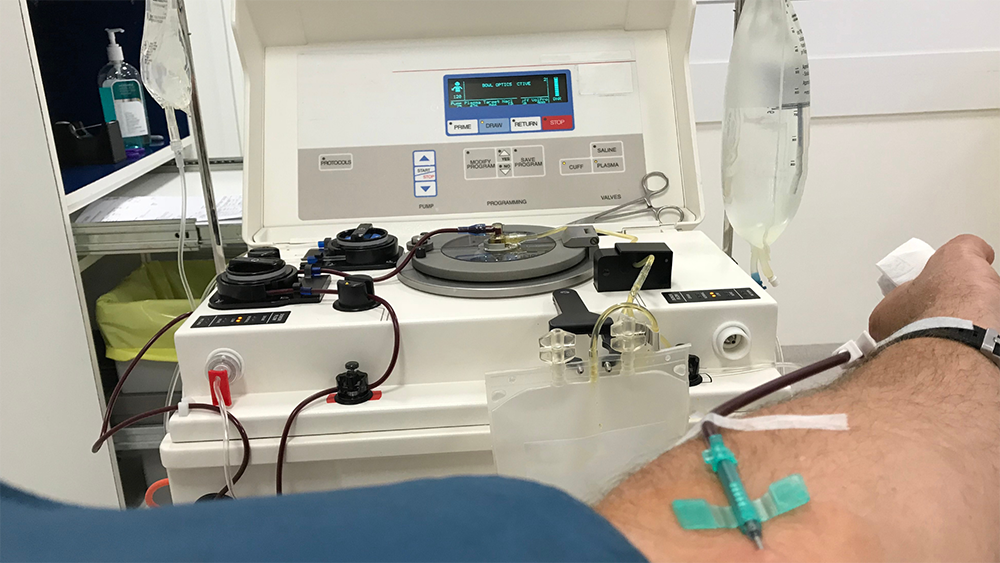
The borrowed antibodies in Ig come from other people—plasma donors! Plasma is the liquid part of blood that carries antibodies and other important proteins throughout your body. When people donate plasma, they help people with PI get the medicine they need. Here's how the donation process works.
The process to collect plasma is called plasmapheresis, and it takes about an hour. During plasmapheresis, an IV takes blood out of a vein in one arm. A machine separates the blood into plasma and blood cells. Then, the machine returns the blood cells in a germ-free saline solution, to replace the plasma, through an IV to a vein in the other arm. After donating, it takes about 48 hours for a healthy person’s body to replace the plasma they gave.
The plasma is frozen until tests can be done to make sure it is safe and of good quality. Plasma donations that pass the tests are pooled together so that the final Ig product has concentrated antibodies collected from thousands of plasma donors. During the process of making the final product, extra steps are taken to remove or destroy germs, even ones too small to detect, so the Ig is safe to use.
When you get an Ig infusion, you're getting antibodies from many different people. This gives your body many types of guards that can detect different types of germs. It's like having an army of guards from thousands of people who want to help you stay healthy.
Thanks to plasma donors and Ig infusions, people with PI can fight off germs better. They get fewer infections and can live healthier, more active lives. Living with PI can still be challenging, but these borrowed antibodies help people stay well and do the things they love.
Ask the adults in your life if they would consider donating plasma.

This page contains general medical and/or legal information that cannot be applied safely to any individual case. Medical and/or legal knowledge and practice can change rapidly. Therefore, this page should not be used as a substitute for professional medical and/or legal advice. Additionally, links to other resources and websites are shared for informational purposes only and should not be considered an endorsement by the Immune Deficiency Foundation.
Receive news and helpful resources to your cell phone or inbox. You can change or cancel your subscription at any time.