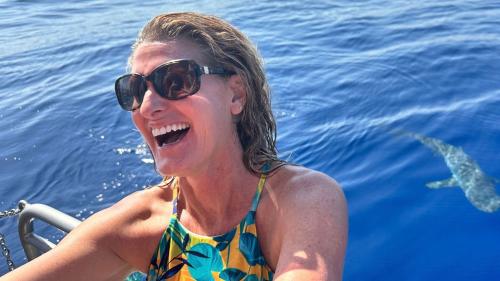
Muralist with CVID spreads joy through her art
October 15, 2025

The more you understand about primary immunodeficiency (PI), the better you can manage it. Learn about PI diagnoses and treatment options.

Living with primary immunodeficiency (PI) can be challenging, but you’re not alone—many people with PI lead full and active lives. With the right support and resources, you can, too.

Be a hero for those with PI. Change lives by promoting primary immunodeficiency (PI) awareness and taking action in your community through advocacy, donating, volunteering, or fundraising.

Whether you’re a clinician, researcher, or an individual with primary immunodeficiency (PI), these resources will help you advance the field. Get details on surveys, grants, and clinical trials.
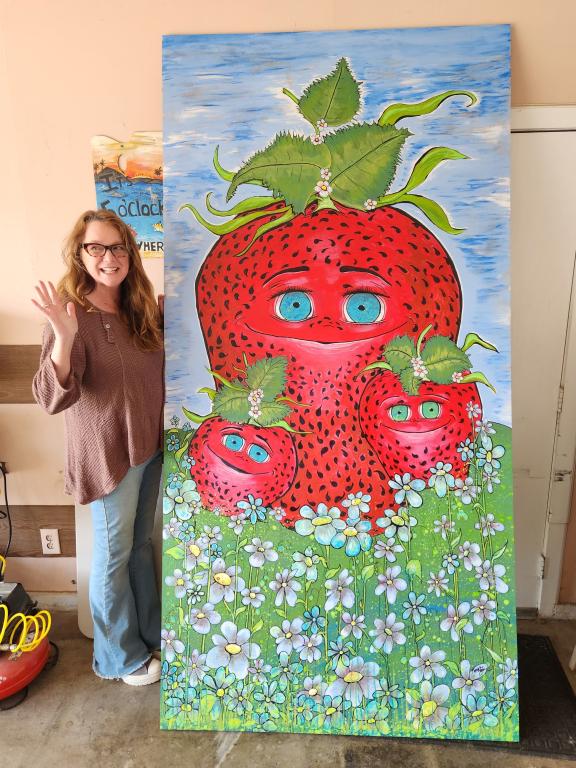
“I’m a live-in-the-moment, get-out-and-breathe-the-fresh-air, get-your-hands-dirty kind of person,” said Katherine A. Taylor, a mural artist. “Creativity is like kindness—you can’t use it up.”
Influenced by cartoonist Gary Larson and puppeteer Jim Henson, Taylor finds satisfaction in seeing the joy her art brings to others. On weekends, Taylor paints murals and creates sidewalk chalk drawings for community events and festivals. Her whimsical artwork depicts frogs, lizards, spiders, and snails in the forest; fish, sea turtles, and coral in the ocean; strawberries, bumblebees, and flowers in meadows. On weekdays, Taylor is an art instructor who works with hundreds of school-age students.
The mural chalk art job requires her to get up and down from the ground frequently, and in the classroom, she walks around helping kids draw. The movement is sometimes physically uncomfortable for Taylor. The 59-year-old has curvature of the spine; several autoimmune conditions that cause severe skin rashes, joint pain, fatigue, excessive sweating, and vitamin deficiency; vision problems; and common variable immune deficiency (CVID).
“To move is to be alive. If I sit, I get sore and I don't feel good. So, I'd rather push through the aches,” said Taylor.
Taylor’s journey with chronic illness started as an adult, but as a child, she remained healthy except for a rare condition called Ross syndrome that affected her sight at age 7. The disorder caused her right pupil to be fixed and permanently dilated. Despite the vision challenge, Taylor played softball, water skied, and enjoyed other outdoor sports.
As Taylor transitioned from high school to college, however, she began to get unusual illnesses. She had shingles, an illness caused by reactivated chicken pox virus that usually strikes older adults, at 19. She developed chronic urinary tract (UTI) and bronchial infections throughout her 20s and 30s. She needed surgery to remove her tonsils and a tumor in her neck. She regularly broke out in severe rashes from bug bites or for no apparent reason.
Doctors had no answers, and one even said her illnesses were too complicated for him to treat. She regularly took antibiotics for the infections and steroids for the rashes. At one point, however, no treatment worked for a rash that covered her entire body.
An autoimmune dermatologist finally provided Taylor with relief—and answers to her ongoing, multi-symptom health problems. The medicine he prescribed cleared the rash within three days.

“When I came back in, I said, ‘You saved my life.’ And he sat down, looked at me, and said, ‘This will happen again. You need to be prepared.’ I mean, that's what you need, right? We all need a doctor like that in our lives,” said Taylor.
“Then I said, ‘What do you do with people like me?’ And he said, ‘You need to go to immunology. This is not a normal reaction.’ And he's the one who saved me.”
Once the immunologist diagnosed Taylor with hypogammaglobulinemia, now known as CVID, at age 42, she started weekly at-home infusions with subcutaneous immunoglobulin (SCIG) replacement therapy. After decades of illness, Taylor began to improve. She hasn’t had a UTI in 17 years, and the SCIG keeps her autoimmune conditions, one of which can lead to organ damage, under control. She still breaks out in unexpected rashes—an ingredient in a cup of coffee or a chemical used to clean a room can set those off—but the hives are manageable.
“If I were to think about my future health, I would make myself sick with worrying all the time. It's just too dark. So, I chose joy. I live in the moment, do what I love, enjoy people around me, make people happy, and create happy art,” said Taylor. “If I had focused on all the negatives, I would not be the active person I am today.”
Taylor, who holds a degree in English literature, started painting at age 26 while working full-time in a field unrelated to art. Her playful depictions of reptiles, amphibians, fish, insects, dogs, and other characters landed her an art show. That show allowed her to sell her prints of frogs to the Children’s Hospital of Orange County's (CHOC) intensive care unit family apartment, where they hung for several years until the hospital was redecorated.
After several years, CHOC sold the frog prints to the family of a child who survived cancer, and the child hung them in her bedroom. Taylor sent the originals to a friend who needed a pancreas and kidney transplant. That friend called them Healing Frogs.
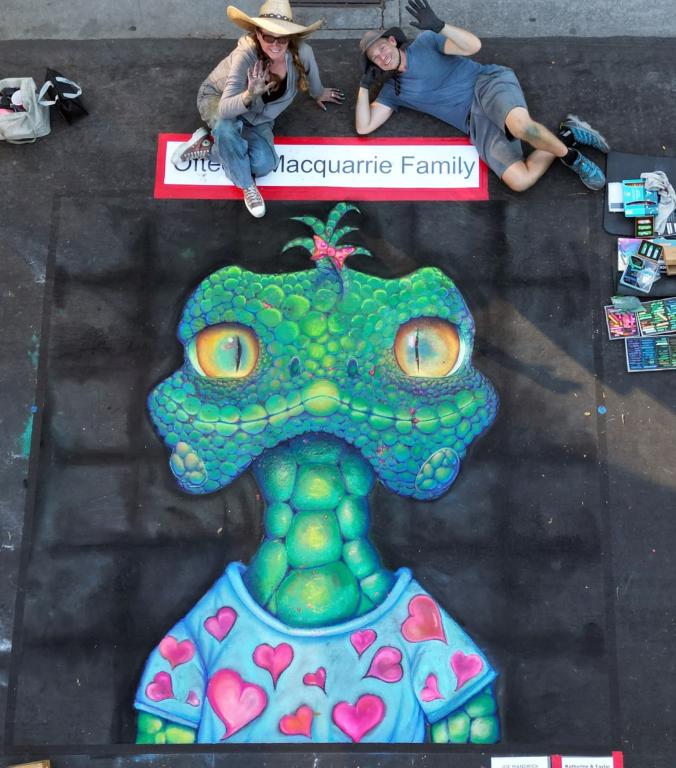
“I realized this is my purpose—to provide healing and smiles through my artwork. Once you put yourself out into the universe, then great things can happen,” said Taylor.
Today, Taylor’s murals cover the walls of children’s hospitals, family health clinics, women and children’s centers, bus stops, and playgrounds throughout her home state of California. She has participated in dozens of community chalk festivals.
Taylor hopes to one day earn a MacArthur Fellow grant. The grant provides $800,000 to an individual working in art, science, writing, education, or another field who shows exceptional talent and dedication to their craft. The money is intended to allow recipients to advance their expertise.
If awarded the grant, Taylor would provide free artwork to low-income health clinics, children’s hospitals, non-profit organizations, and infusion centers.
“My goal is to make the world a happier place,” said Taylor.

Receive news and helpful resources to your cell phone or inbox. You can change or cancel your subscription at any time.