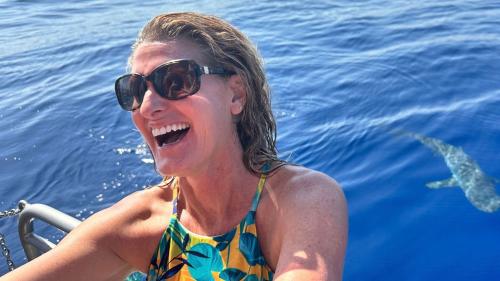
Teen with A-T explores passion for adventure
May 11, 2026

The more you understand about primary immunodeficiency (PI), the better you can manage it. Learn about PI diagnoses and treatment options.

Living with primary immunodeficiency (PI) can be challenging, but you’re not alone—many people with PI lead full and active lives. With the right support and resources, you can, too.

Be a hero for those with PI. Change lives by promoting primary immunodeficiency (PI) awareness and taking action in your community through advocacy, donating, volunteering, or fundraising.

Whether you’re a clinician, researcher, or an individual with primary immunodeficiency (PI), these resources will help you advance the field. Get details on surveys, grants, and clinical trials.
This article was first published in the Spring 2026 edition of the ADVOCATE newsletter.
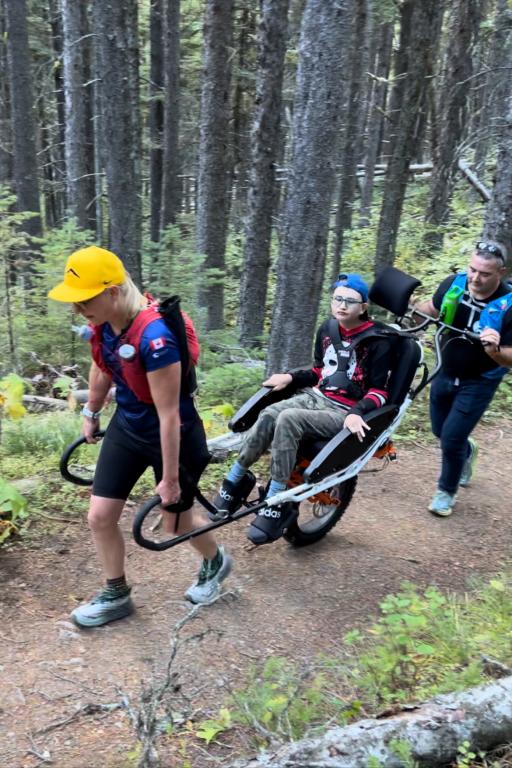
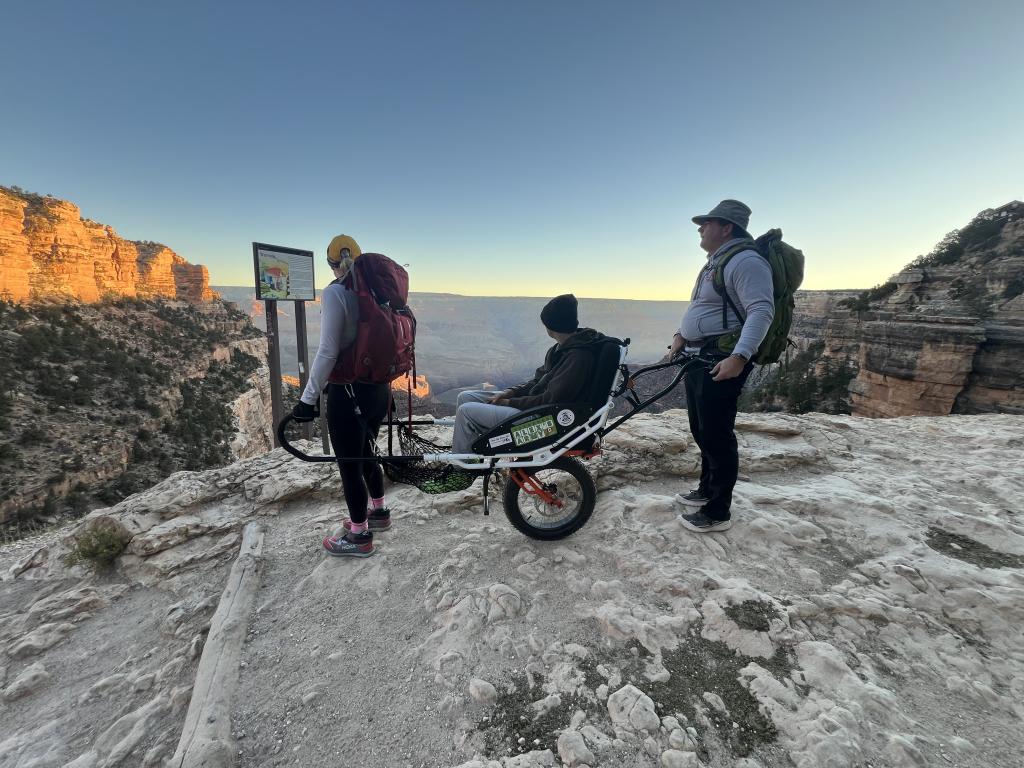
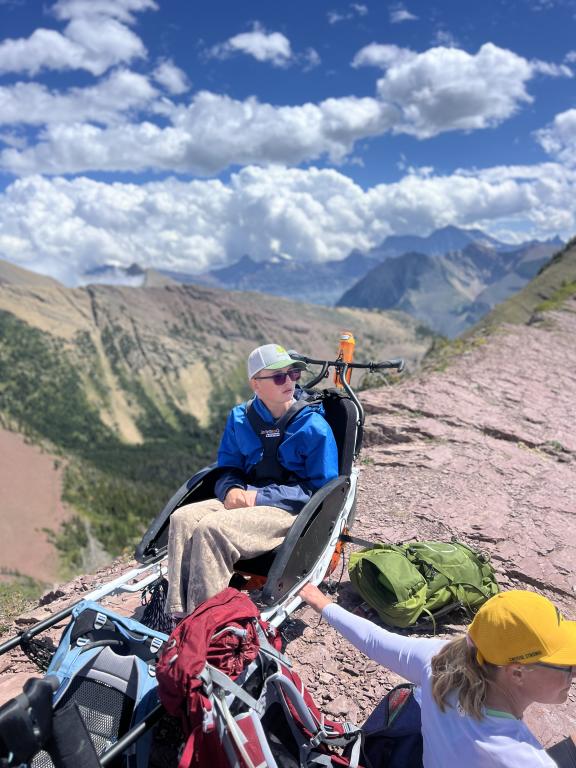
Alex Olive, 15, started his trek into the Grand Canyon at sunrise. His mother, Crystal, steered the front of his adaptive wheelchair, while his father, Robert, took the back. Brother Clark, 12, recorded the hike. His parents walked in unison down the rocky, rutted path, lifting the chair over log-hewn steps and across uneven ground.
The bumps jostled Alex, who rides in a chair because he has ataxia-telangiectasia, or A-T, which impedes his ability to walk. Along the narrow trail, with the canyon wall on one side and a sheer drop-off thousands of feet down on the other, Alex calmly admired the canyon’s pinks, rusts, yellows, and browns that shifted with the sun.
The 10-mile hike down to the Colorado River took the better part of the day. The grueling uphill out of the canyon pushed the family into the night hours. They donned headlamps and stopped every mile or so to rest. When they finally emerged out of the canyon, Alex, Clark, Crystal, and Robert put their hands on the Bright Angel trail marker. Sweaty, dirty, and tired, they quietly celebrated.
“We all touched it together to signify we finished this hard thing as a family,” said Crystal. “We were all exhausted, but it was a very cool family experience. Nobody really understands how it was so physically hard on all of us, even Alex, sitting in that chair all day being bumped up and down.”
A-T is a progressive neurodegenerative genetic condition that makes Alex unable to control his muscles (ataxia) and causes small spider veins on his ears and cheeks (telangiectasia). A-T is also a primary immunodeficiency (PI) that affects Alex’s T and B cells, making him vulnerable to lung and sinus infections.
Alex showed no signs of A-T as a baby. Crystal noticed he wobbled and fell a lot when he learned to walk but as a first-time mom, she didn’t find it unusual. A visit to her aunt made Crystal reconsider her son’s health.
“My aunt took one look at Alex’s walk, and she said, ‘Alex has A-T,’” said Crystal.
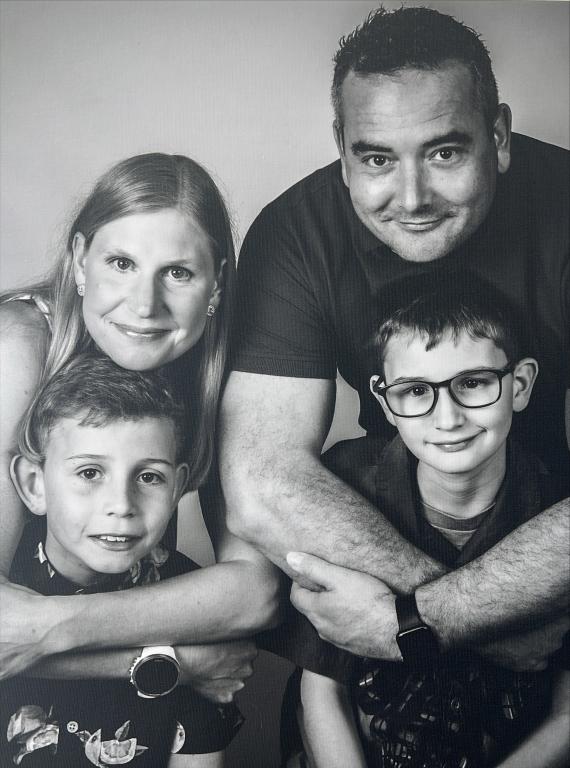
Crystal’s cousin died from complications associated with A-T when he was 20 years old. No one in the family, including Crystal, knew that the condition could be inherited. Tests showed Alex carried the same variants in his ATM genes as his second cousin. Doctors diagnosed Alex with A-T at 18 months old.
The ATM gene codes for a protein that’s needed to repair DNA (deoxyribonucleic acid), the genetic instructions for cell function. When the ATM gene isn’t working, the body can’t repair damaged DNA, and cells with damaged DNA die instead. This cell death affects the nervous and immune systems the most. A-T is autosomal recessive, which means a person has to inherit two ATM variants, one from either parent, to have A-T.
People with A-T experience neurological decline that makes it hard for them to control their muscles. Walking becomes difficult, and most children with A-T use a wheelchair starting at about age 10. The speech of a child with A-T may be slurred and slow, and they may have trouble swallowing and eating. Children may lack muscle control in their arms and hands, preventing them from holding a pencil and writing. Sometimes children can’t control their eye muscles so they can’t read.
Many children with A-T also have immune system problems and develop cancer. About 70% of children diagnosed with A-T have problems with their immune systems and are highly susceptible to lung infections leading to pneumonia. Between 30-40% of children with A-T develop cancer, most commonly blood cancers like leukemia or lymphoma.
Though symptoms vary between people, the condition is progressive. No cure exists for A-T and treatments target symptoms. Most children with A-T live into their teens or early adulthoods.
Alex takes weekly subcutaneous immunoglobulin (SCIG) replacement therapy. He requires tube feeding because his weak swallowing sometimes causes food to go down his windpipe instead of his esophagus, causing pneumonia. He has lost his fine motor skills but can still talk.
“Alex is lucky. His speech is still really good. He’s very easy to understand,” said his mother.
The Olives enrolled Alex in a University of California Los Angeles (UCLA) clinical trial for treatment of A-T when he was about 7. The trials didn’t yield good enough results for him to continue with therapy, but Alex enjoyed the trips from his home in Alberta, Canada, to Los Angeles. Mother and son would fly in monthly for three days and they always found time to do Alex’s favorite thing—take the train to the Santa Monica Pier to eat french fries and drink milkshakes.
“He used to love that,” said Crystal.
Those trips instilled a passion for travel in Alex, who enjoys taking cruises, visiting theme parks, hanging at the beach, and hiking nearby mountains with his family. He’s been to Hawaii and both Disneyland and Disney World.
‘We did a lot of traveling when he was smaller so he could do a little more before he had to use his wheelchair,” explained Crystal.
Alex lives on a working dairy farm run by his family. He attends public school, and his hobbies include making AI art and playing farm simulator games. He also likes riding a 4-wheeler with his cousin. Once a week, he works out with a personal trainer at the local gym.
“We try to normalize his condition as much as possible. The one thing about Alex is even though he’s got all of this going on with his health, he still has big dreams and big goals and we’re always trying to make those things, the impossible, seem possible for him,” said Crystal.
The Olive family finds support through the A-T Children’s Project, a non-profit that offers education and resources to families living with the condition. The organization holds an annual event in Florida where families gather and connect. Crystal has developed a network of friendships with other moms whose children have A-T. They stay updated through social media.
“We support each other. We keep up with what’s going on with each other’s kids. And even with them, it’s interesting to see how different all of our kids are with this disease. They all have different problems,” said Crystal.
“It’s very hard for people who are not in this situation to understand what’s going on unless you’re living in it. You lean on your other A-T families because they live in it and they understand it.”
Crystal is proud of her son for his tenacity and devotion to accomplishing his goals. His next adventure is hiking up Mt. Fuji in Japan and although Crystal has hit a few roadblocks in the planning stages, she is determined to make it happen.
“Alex is a good role model for other kids with this disease, showing them that you just need to put in work. Even though life is hard, that doesn’t mean we just give up, right?” said Crystal.
“My message for others living with A-T is always the same. You tell yourself you can do hard things, but do you really believe it? I think my son is living proof that you can do hard things if you believe you can. This disease doesn’t define who you are as a person, it’s just something you live with.”

Receive news and helpful resources to your cell phone or inbox. You can change or cancel your subscription at any time.