
Why participating in primary immunodeficiency clinical research matters
November 12, 2026
The more you understand about primary immunodeficiency (PI), the better you can manage it. Learn about PI diagnoses and treatment options.

Living with primary immunodeficiency (PI) can be challenging, but you’re not alone—many people with PI lead full and active lives. With the right support and resources, you can, too.

Be a hero for those with PI. Change lives by promoting primary immunodeficiency (PI) awareness and taking action in your community through advocacy, donating, volunteering, or fundraising.

Whether you’re a clinician, researcher, or an individual with primary immunodeficiency (PI), these resources will help you advance the field. Get details on surveys, grants, and clinical trials.
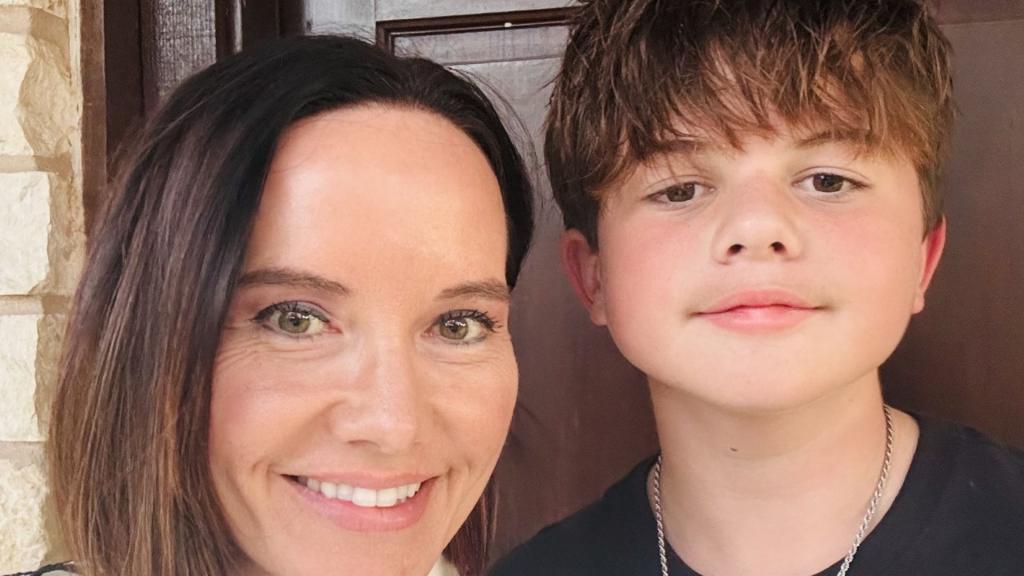
Two years ago, Leah Throckmorton heard from a colleague about a clinical research study for people with primary immunodeficiency (PI) at the National Institutes of Health (NIH). She researched the study, spoke with a participant, and checked with her son’s immunologist. Then she reached out to the NIH researchers.
As a nurse and healthcare executive, Throckmorton understood what a study could offer her son Benson, 11. He was diagnosed with common variable immune deficiency (CVID) at age 4, after repeated strep throat and ear infections, and several surgeries to place ear tubes. Doctors started him on immunoglobulin (Ig) replacement therapy three years later when he developed a severe skin infection.
“I wanted the opportunity to learn more, have input from world-renowned health care providers, and have them on my son’s care team,” she said. “I can’t just worry about how he is as an 11-year-old boy. I need to consider what does this mean when he’s 16? What should I be looking for when he’s 30? And I want answers for other kids, too. That’s what pushed me to pursue enrolling my son.”
Researchers perform clinical research studies to advance medical knowledge and improve patient care, including for those with PI. Clinical research falls into two broad types: observational studies and clinical trials.
“The key difference is whether the research changes your care,” said Paula Henao, M.D., an immunologist and Immune Deficiency Foundation medical director.
In an observational study, nothing about a patient’s care changes, explained Henao. Patients continue to rely on their own doctors for treatment decisions, while researchers collect information such as medical records, lab results, survey answers, or blood samples and look for patterns over time.
Common types of observational studies in PI include patient registries like USIDNET, a national U.S. database; natural history studies, which follow people for months or years to learn how a condition changes over time; and survey and interview studies.
“Observational research matters especially in PI,” Henao said. “The conditions are rare, so no single clinic sees enough patients to learn much on its own. Pooling information from many centers shows which complications are common, how conditions behave over time, and which treatments seem to help most. That knowledge shapes future [clinical] trials.”
In contrast, an interventional study, also known as a clinical trial, tests a medicine, device, procedure, or other intervention to learn whether it is safe and whether it works.
The length of a clinical trial varies. Ig product studies for PI typically run about 12 months so infection rates can be measured across every season. Gene therapy studies follow patients for 15 years because some side effects appear later in life.
Each observational and interventional research study follows a written plan, called a protocol, approved by an independent Institutional Review Board (IRB). The plan explains who can join the study, what will be measured and what participants are expected to do, and how long the study lasts.
Before joining a clinical study, a patient meets with the research team who explains the study and gets the patient’s written agreement, called informed consent. Study participation is voluntary and patients can leave at any time.
With regard to cost, most trials provide care for free and some even pay for participation and/or travel costs. Patients should check with their insurer and the study team before they start the trial to determine financial coverage.
People join studies to try a new treatment, to get care from a specialized team, or to help others with the same condition. Possible benefits include early access to new treatments, close monitoring, and moving research forward.
Risks depend on the study. A new treatment may cause unknown side effects or may not work as well as current treatment. Participants may receive a placebo, though PI studies generally do not take people off standard-of-care treatments like Ig replacement to do so. Studies may also mean extra doctor’s visits, travel, or tests, and sharing health or genetic information.
Finding a study takes careful research. No single source lists every study. Clinical trials are the easiest to find because almost all of them are legally required to be listed in public databases. Observational studies take more searching and don’t have to be registered.
Patients should start by asking their immunologist, since many PI studies run through specialty centers and doctors often hear about them first. Other resources include searchable databases and contact registries. In a searchable database, a patient applies to a specific study by browsing or filtering by medical condition, treatment type, or geographic location. In a contact registry, a patient shares their health background and study preferences, and researchers reach out to them if the patient’s profile is a match for the study.
Searchable databases include:
Contact registries include:
“Joining a contact registry or a patient organization's mailing list is often the easiest way to hear about future studies of both kinds,” said Henao.
Every study has eligibility criteria, such as a specific diagnosis, gene change, or age range. Not qualifying simply means the study is not the right fit for the patient.
For Throckmorton, a personal connection led to her son’s enrollment in the observational study at NIH when a co-worker suggested that the study’s close monitoring might help Benson.
To enroll her son into the study, Throckmorton wrote to the NIH to advocate for her son, sent his records, and completed several interviews. Benson was accepted into “Investigating the Mechanistic Biology of Primary Immunodeficiency Disorders,” a 10-year natural history study, when he was 9.
The family spent two days at the NIH in Bethesda, Md. Benson had a complete lab panel, pulmonary function tests, a computed tomography (CT) scan, a physical exam, genetic testing that included the whole family, and more than an hour with a top immunologist reviewing his case.
“We live at the hospital all the time with him, but we hadn’t had this type of in-depth look at his condition,” Throckmorton said.
The CT scan revealed that Benson’s liver and spleen were enlarged, a possible complication of CVID. The finding was especially important because Benson is an athlete who plays soccer, football, and basketball. An enlarged spleen can be dangerous for contact sports because of the risk of rupture, so the finding put Benson on a new health monitoring path.
Benson’s immunologist and specialists in Texas now communicate with the NIH immunologist, who acts as a consultant to the care team. The family alternates between a telemedicine check-in one year and an in-person visit to NIH the next. Benson has yearly scans, ultrasounds, and labs to track his liver and spleen. As long as his organs stay under a certain size, he can keep playing.
“As an 11-year-old boy, the most important thing to him is to do sports,” said Throckmorton. “We make a big deal whenever we go to those sonograms. He gets very nervous for them.”
Other tips for those considering joining a clinical research study include:
Henao said the importance of clinical research studies cannot be underestimated.
“Clinical trials are the most reliable way to learn whether a new treatment is safe and truly works, and they are what the FDA relies on to approve new treatments. For rare diseases like PI, research is impossible without patients willing to take part,” said Henao. “Because patients live far apart, studies often need many medical centers working together, sometimes across countries. Each participant makes a real difference.”
Throckmorton encourages other families to consider if participation in clinical research is right for them.
“Be curious. Find out what it is. Find out how you can help others by being a part of this,” she said. “But also find out what you can gain from being a participant. Think not only of the current state, but of the future too, especially for all of our younger children.”

Receive news and helpful resources to your cell phone or inbox. You can change or cancel your subscription at any time.