
IDF logo
Pregnant woman holds baby outfit.

Fertility and pregnancy

Key points: 

  • Many people with or who are carriers of PI have had healthy pregnancies and deliveries. 
  • However, individuals with PI and carriers of PI may be at increased risk of fertility and pregnancy complications, including infections, bleeding (or, conversely, clotting), and flares of autoimmune or autoinflammatory symptoms. The risk of these complications depends on the type of PI involved.
  • People with PI should discuss their reproductive health and family planning concerns early on with a multidisciplinary team of healthcare providers. This team may include geneticists, immunologists, hematologists, rheumatologists, obstetrician-gynecologists (OB/Gyn), maternal-fetal medicine (MFM) specialists, high risk OBs, and others.
  • Clear communication with OB/Gyn providers about a PI diagnosis is important for closer monitoring throughout pregnancy, and close post-delivery monitoring of both mother and baby are essential.
  • Immunoglobulin (Ig) replacement therapy is safe and essential for mothers with certain types of PI during pregnancy to provide antibodies that keep both mother and baby healthy.
  • Some medications used to treat PI can affect fertility and pregnancy. The decision on how to adjust dosing or whether to discontinue these medications during pregnancy should be discussed carefully with your immunologist and OB/Gyn.

Having children is important to many people with PI or who are carriers of PI. However, family planning in the context of a chronic condition can cause increased stress and anxiety. Concerns include passing the condition on to children, fertility challenges, pregnancy complications, and managing both the mother’s and baby’s health during pregnancy and after birth.

In addition, it can be difficult to find an obstetrician (OB/Gyn) who understands PI and the increased risks involved. While there is still much to learn about how fertility and reproduction are affected by PI, it is clear that individuals who have or are carriers of PI can have successful pregnancies and healthy deliveries. How PI may affect fertility and pregnancy depends on the specific type of PI, the overall health of the person going into pregnancy, and the vigilance and experience of their healthcare team. 

How PI affects fertility 

Many people with PI want to know if and how their underlying immune disorder and any treatments they have received affect their ability to have healthy children. There are more than 550 types of PI and experts do not know in detail how most of them impact fertility and reproduction. In general, some PIs are associated with a reduced fertility rate, which means that people with PI have fewer children than the general population [1]. However, the reasons why are unclear. It is possible that some people with PI:

  • Choose not to have children.
  • Try to have children but have difficulty conceiving. 
  • Experience more pregnancy complications, including miscarriages or stillbirths.

In contrast, experts know that the medications used for conditioning during hematopoietic stem cell transplant (HSCT) or gene therapy can lower fertility for both females and males. This risk of reduced fertility in HSCT depends on many factors [2]:

  • The underlying PI.
  • Age at HSCT. HSCT at a younger age is linked to increased success of pregnancy post-HSCT.
  • The conditioning regimen used. Lower doses of DNA-damaging radiation and/or chemotherapy are generally linked to increased success of pregnancy post-HSCT.
  • Post-HSCT complications, including infections and graft versus host disease.
  • Absence of cancer (e.g., lymphoma, leukemia) at the time of HSCT is linked to increased success of pregnancy post-HSCT.

Transplant teams can personalize conditioning regimens to both ensure a successful transplant and protect fertility as much as possible [3]. In addition, most transplant centers now take future fertility into account when counseling individuals and caregivers and offer the option to harvest sperm or eggs prior to HSCT. However, this can be a difficult decision. While sperm collection after puberty is relatively straightforward, sperm harvest before puberty and egg harvest at any age require invasive procedures. It can also be expensive to store sperm or eggs, and there is still the potential for passing down PI-causing genetic variants to biological children. 

Prenatal and carrier genetic testing and counseling

Many couples where one partner has PI, is a carrier of PI, or has a family history of PI want to know how their future children could be affected. If the gene variant responsible has been identified (i.e., you have a genetic diagnosis), it may be possible to screen or even diagnose PI in the baby before birth (prenatal testing).

A prenatal screening test is usually not invasive and can tell you if the baby has an increased risk of having a condition. However, a screening test cannot say for sure whether the baby has the condition or not. An example is the maternal blood test or nuchal fold ultrasound measurement commonly used to screen for Down syndrome.

If a screening test shows a high risk of the baby having a condition, then providers will do a diagnostic test. Diagnostic testing provides a more definitive answer and usually requires a more invasive procedure to collect a tissue sample, such as chorionic villus sampling (CVS) or amniocentesis. With prenatal diagnostic testing, your baby can be conclusively diagnosed with a condition before they are born.

Note, however, that many people with PI, especially people with antibody deficiencies, may not have identifiable variants that allow for prenatal screening or diagnosis. It is very important to get appropriate pre- and post-test genetic counseling from a genetic counselor or medical geneticist who understands immunity and PI. They can help you understand your testing options, whether the test(s) available screen for or diagnose PI, and how the test results might impact pregnancy care or your decision-making as partners.

In couples where one partner has a family history of PI but does not have PI themselves, it may be possible to find out if the partner ‘carries’ a genetic variant linked to PI. This type of genetic testing is called carrier testing. If the person does carry a genetic variant linked to PI, it is possible to pass down this variant to their children. In some cases, such as a genetic female who carries a PI-causing variant on an X chromosome (X-linked), it is possible that the couple’s children will not just inherit the variant but will have the condition. As with prenatal testing, it is important for those considering carrier testing to have both pre- and post-testing genetic counseling.

In vitro fertilization (IVF) is one way people with PI and those who carry PI-causing variants may be able to make sure they do not pass down PI to their children. IVF uses partners’ sperm and eggs to create embryos in a laboratory. Those embryos can be tested for specific genetic variants through a process called preimplantation genetic testing for monogenic disorders (PGT-M; formerly known as preimplantation genetic diagnosis or PGD). Then, healthcare providers implant only embryos that do not have the PI-causing variant. IVF with PGT-M is an alternative to testing for PI after conception. However, like prenatal testing, the parent must have an identifiable genetic variant linked to PI.

How PI affects pregnancy outcomes

There are few studies examining pregnancy outcomes in individuals with PI, which is why much more research needs to be done in this area. Most information on the ability of people with PI to become pregnant and their pregnancy outcomes comes from surveys of women diagnosed with common variable immune deficiency (CVID) and other antibody deficiencies. A few studies have included people with other types of PI, such as primary immune regulatory disorders (PIRDs) or autoinflammatory disorders. Because PI can take many years to be recognized, many women with PI symptoms may have completed childbearing before being diagnosed.

A 2015 survey of 490 women with self-reported CVID diagnoses and 100 women with self-reported hypogammaglobulinemia diagnoses found that [1]:

  • About 75% of all respondents reported that they did not have difficulty getting pregnant. 
  • More than 70% of respondents who were already diagnosed at the time of their first pregnancy reported concerns about 1) their ability to have children, 2) their children being affected by the same PI, and/or 3) increased health risks during pregnancy. 
  • 50% of the respondents that had a PI diagnosis before they had children had reproductive health and family planning concerns, in comparison to 25% of undiagnosed and untreated women. The former also reported their PI diagnosis as having more impact on their decision to try for conception. 
  • Out of 966 pregnancies reported in the survey, 695 (72%) resulted in a live birth; in comparison, in 2008, 62% of pregnancies resulted in live births in the general U.S. population.
  • The majority of the pregnancies reported did not have complications. 
  • Most people continued with immunoglobulin (Ig) replacement therapy during pregnancy. 
  • The rates of miscarriage reported by survey respondents for first and second pregnancies were similar to the U.S. national average. 
  • Fewer terminations of pregnancies were reported than the U.S. national average. 
  • At the time of the survey, 15% of children born to mothers with CVID were diagnosed with an antibody deficiency; 44% were diagnosed with CVID and 14% had selective IgA deficiency (SIgAD)
  • Of those who had a child with a PI, 60% reported that this did not have an impact on their decision to have more children.

A study from the Czech National Registry of Reproduction Health on 54 women with CVID reported 115 total pregnancies, 88 (77%) of which resulted in live births [4]. This study found that miscarriages were more common in women who had PI symptoms while pregnant but were not yet diagnosed. However, pregnancy complications, such as low birth weight babies, high blood pressure (preeclampsia/eclampsia), and stillbirths, happened at similar rates regardless of whether the women had PI symptoms or were receiving treatment.

More recently, a study documented pregnancy outcomes in 93 women with PI living in France [5]. Twenty-seven of the women had a combined immunodeficiency (CID), 51 had an antibody deficiency, and 15 had innate immune disorders. Altogether, they had 222 pregnancies with 157 live births (71%). Four of the live births, or 3%, were severely premature. Overall, these outcomes were similar to the French general population. However, the study found that women with a history of severe infection were more likely to miscarry or terminate their pregnancy. Notably, only 59% of the pregnancies involved infection prevention appropriate for the pregnant person’s diagnosis, such as antibiotic/antifungal prophylaxis and/or Ig replacement therapy.

Familial Mediterranean fever (FMF) is the best studied autoinflammatory PI in terms of reproductive outcomes. Women with FMF have an increased risk of infertility or reduced fertility, as well as pregnancy loss, preterm labor, and stillbirth compared to the general population. However, the overall risk of stillbirth appears low, and fertility is usually preserved, although active or uncontrolled disease can reduce fertility in some women. Good disease control, especially with colchicine therapy, improves fertility and pregnancy outcomes and is considered safe during pregnancy and breastfeeding [6], [7,8]. Researchers have noted similar fertility and pregnancy complications with many other autoimmune or inflammatory conditions that someone with PI may also have, such as rheumatoid arthritis, systemic lupus erythematosus (SLE), celiac disease, thyroid autoimmunity, and endometriosis [9,10].

Unfortunately, for many other PIs, researchers have only published isolated case reports or case series.

Managing PI during pregnancy

Healthcare providers caring for a pregnant individual with PI have to carefully balance the need to treat the mother’s PI to reduce the risk of complications with the need to protect the developing baby.

Individuals with PI benefit from having a healthcare team that understands their condition and can partner with them throughout pregnancy. Many OB/Gyn providers are not familiar with PI. It is important to communicate early and clearly with your OB/Gyn about your PI diagnosis because closer monitoring will set you up for success.

You may want to find a maternal-fetal medicine (MFM) specialist or a high-risk OB and connect them with your immunologist and other relevant providers. Involving an immunologist and ensuring good communication with the obstetric team can help support safe and coordinated care for both you and your baby.

Pregnant individuals who are carriers of PI may also need to educate their OB/Gyn providers and/or seek out specialized MFM or high-risk OB providers. This is especially important if you are a symptomatic carrier for conditions like X-linked chronic granulomatous disease (CGD) or Wiskott-Aldrich syndrome (WAS).

A survey of pregnant women on immunoglobulin (Ig) replacement therapy found that, although they had a good experience with prenatal care, they felt marginalized and unheard when discussing their PI and the need for Ig replacement therapy [11]. Ig replacement therapy, either subcutaneous (SCIG) or intravenous (IVIG), is generally safe in pregnancy. In fact, all babies rely on the protective IgG antibodies transferred through the placenta from their mothers during their first several months of life. Because of this, Ig replacement therapy for a pregnant person with antibody deficiency is critical for both the mother and child.

IgG antibodies move from the mother’s bloodstream to the developing baby’s bloodstream across the placenta, starting as early as 13 weeks of pregnancy. This IgG transfer increases as pregnancy progresses, with the largest amount transferred from mother to baby in the third trimester [12]. Studies of pregnant women without PI show that the baby receives all subclasses of IgG and IgG that protects against a wide variety of infections. Other classes of antibodies, such as IgA, are not transferred to the developing baby. By week 36 of pregnancy, the baby’s IgG levels are equal to, if not slightly higher, than the mother’s.

In the 2015 survey, the majority of women did not report changes in Ig dosing during pregnancy: 25% received a dose increase, 13% received Ig more often, and 1% reported a dose reduction [1]. However, healthcare providers should consider increasing the dose or frequency of Ig replacement therapy because:

  1. As the pregnant person’s weight and blood volume increase, they will need a higher dose of Ig or more frequent infusions to maintain protective antibody levels.
  2. Transport of IgG through the placenta means the pregnant person needs higher doses or more frequent infusions to provide protective antibody levels to the baby.

If you are using SCIG and become pregnant, you and your healthcare provider should discuss whether to continue SCIG or switch to IVIG. Many women on SCIG continue safely throughout pregnancy, especially if they infuse in their thighs, hips, or upper arms instead of the abdomen. The decision should be guided by your immunologist and Ob/Gyn, the size and location of your infusion sites, your comfort, and whether vein access or your volume/dose needs to change during pregnancy.

Healthcare providers should test Ig levels throughout the pregnancy, especially in the third trimester, to watch for trends and adjust the amount of Ig or frequency of infusions so that the mother feels her best.

Many individuals with PI take medications other than Ig that are essential to treating their condition. The American College of Obstetricians and Gynecologists (ACOG) classifies medications in terms of their risk of causing birth defects in a baby (teratogenicity) or other complications in a pregnancy [13]. However, the potential harmful effects of newer medications available to treat PI may not be known.

Many people with PI are on additional medications to prevent infections. These include preventative antimicrobials such as antibiotics, antivirals, or antifungals or medications that boost elements of the immune system, like interferon gamma-1b (trade name Actimmune) or granulocyte-colony stimulating factor (G-CSF). Healthcare providers, the person with PI, and their loved ones need to consider the safety of these medications in pregnancy.

Some people with PI take medications that suppress or adjust certain parts of the immune system (immunosuppressants or immunomodulators) to prevent widespread, damaging immune dysregulation, such as inflammation, autoimmunity, or overgrowth of white blood cells (lymphoproliferation). While some of these medications are linked with potential harm to the developing baby, it is important to also consider their ability to keep a pregnant individual's immune system under control. Uncontrolled immune dysregulation has just as much potential, if not more, to harm the baby.

Note that some medications are potentially more harmful in the first trimester of pregnancy, but can be safely restarted later on. Others should be stopped or healthcare providers should consider other alternatives.

One recent review looked at outcomes for pregnant individuals with chronic inflammatory conditions (such as FMF or cryopyrin-associated periodic syndromes (CAPS)), which are linked with higher risk for pregnancy complications, who were treated with anakinra and/or canakinumab during their pregnancies [14]. Anakinra and canakinumab are immunosuppressants that stop inflammation by blocking chemical signals to the IL-1 protein. Of the 88 pregnancies, 57 (65%) resulted in healthy, full-term deliveries without complications. Twelve of the pregnancies (14%) resulted in preterm births and one pregnancy resulted in stillbirth. The review concluded that treatment with IL-1 blocking medications during pregnancy does not increase the risk of poor outcomes in people with these otherwise high-risk conditions.

Ultimately, decisions about medication changes in pregnancy are personal and should be made together with your medical team. Your immunologist and Ob/Gyn providers can help review the risks and benefits, discuss different options, and support you in choosing what feels right for you and your family.

Pregnant individuals with PI should receive all vaccines routinely recommended in pregnancy by the American College of Obstetricians and Gynecologists (ACOG) to protect themselves from infections and to support the baby’s growing immune system [15,16].
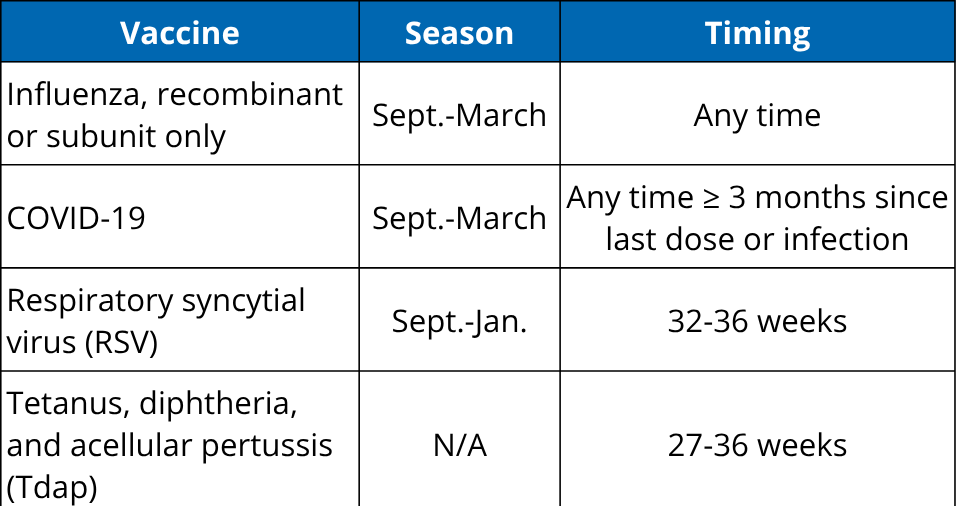
Timeline of vaccines that are recommended during pregnancy
Vaccines recommended for pregnant individuals with PI.

These immunizations are safe and recommended even in individuals on Ig replacement therapy or immunosuppressants. First, Ig products generally do not protect against current seasonal virus strains, such as the newest influenza or COVID-19 variants because of the time it takes to manufacture them. Second, patients with antibody deficiencies may still make T cell responses to vaccines that provide some protection against severe infection [17]. Finally, if the mother makes any IgG antibodies in response to vaccines, they will be transferred through the placenta to the baby. Since newborn babies cannot make their own antibodies (even if they don’t have PI) until they are 4-6 months of age, these transferred antibodies are an important layer of protection for them in early life.

There are increased risks during pregnancy in individuals with PI that need to be clearly communicated to OB/Gyn or MFM providers. These risks depend on the type of PI the pregnant person has and may include infections, bleeding (or, conversely, clotting), and flares of autoimmune or autoinflammatory symptoms.

Individuals with PI are at risk for recurrent, long-lasting, severe, and difficult-to-treat infections. These infections may include ear infections, sinus infections, or pneumonia but can also include skin and soft tissue infections like cellulitis, central nervous system infections like meningitis and encephalitis, gut infections, bone and joint infections, and infections of other organs. People with PI are also at risk for infections involving large parts of the body (systemic or disseminated infections). Specific to pregnancy, chorioamnionitis, which is an infection of the amniotic fluid and the membranes surrounding the baby, can also happen in people with PI [18]. Depending on the type of PI, viruses, bacteria, and fungi can all cause these infections.

OB/Gyn and MFM providers should be aware that individuals with PI may not have classic symptoms of infection, such as a fever, so they need to watch for subtle signs of infection as well. Providers should test and evaluate the pregnant individual for an infection if they feel unwell, even if there is no fever. If a pregnant person with PI does have signs or symptoms of an infection, they need to be seen in a hospital emergency room right away. Providers should not hesitate to prescribe antibiotics or other antimicrobials.

Many people with PI have low blood cells or platelets, so their hemoglobin and platelet counts need to be monitored carefully during pregnancy through a complete blood count (CBC) with differential tests. This is especially important for individuals who have had episodes of autoimmune hemolytic anemia (AIHA) or immune thrombocytopenic purpura (ITP) as part of their PI. These complications are most often triggered by physiological stress, of which pregnancy and childbirth are clear examples.

Hemoglobin and platelet counts are not routinely checked in pregnant individuals without PI. Experts recommend checking these levels at least once every trimester in individuals with PI, and even more frequently in the final month of pregnancy. It is also critical to monitor these counts at least once during labor and childbirth and within the first weeks after childbirth. Experts recommend that the pregnant individual see their OB/Gyn provider for a CBC with differential test within the first two weeks after delivery.

Pregnancy increases the risk of blood clots, even in people who don’t have PI. However, individuals with PI, especially those with autoinflammatory disorders or PIRDs, are at even higher risk for blood clots, especially if they have stopped their medications during pregnancy. Clots can block blood flow, causing damage to organs and tissues, like the legs (deep vein thrombosis), lungs (pulmonary embolism), or brain (ischemic stroke). Signs of these conditions, like swelling or pain in the legs, chest pain, or slurred speech, are medical emergencies that need immediate emergency room attention with ultrasound or imaging tests.

Many people with PI fear that they will experience flares of autoimmune or autoinflammatory symptoms during pregnancy. The physiological stress of pregnancy can trigger flares of the underlying PI. If the person stopped immunosuppressants prior to pregnancy, a flare is even more likely. Your OB/Gyn or MFM provider needs to work with your immunologist or rheumatologist to carefully follow you and manage your care in this case.

If a flare occurs, your healthcare providers may restart you on a lower dose of immunosuppressant or prescribe an alternative medication. Your provider may recommend immediate delivery of your baby if a life-threatening flare happens.

Because some individuals with PI have a higher risk of infection or complications during delivery, experts recommend planning for a hospital delivery. Midwives and doulas can still be important members of the care team, but it is safest to deliver in a facility that can quickly address complications if needed. Experts do not recommend home births, hospital-based deliveries where midwives or doulas serve as the only medical provider, or alternative birthing plans for pregnant individuals with PI. These recommendations are aimed at protecting the safety of both the delivering mother and the newborn child.

When possible, individuals with PI should deliver vaginally, because it generally has a lower risk of infection and complications than a Cesarean section (C-section). Pregnant individuals with PI should undergo C-section based on standard medical/obstetric guidelines, rather than solely because of PI.

Help your pregnancy care provider understand PI

Choose the template that fits your situation—one for individuals diagnosed with PI, and one for carriers of X‑linked PI (symptomatic or not). Both can be tailored with guidance from your immunologist to clearly communicate relevant risks, treatments, and your monitoring needs during pregnancy.

Doctor listening to patient.

Newborns in families with PI

For the newborn baby of an individual with PI, there may be a number of concerns. These concerns include whether the baby has PI, as well as potential health effects from the birthing parent’s PI or medications taken during pregnancy. The newborn should be followed carefully by a pediatrician who knows about the parent’s PI. It may be helpful to have a provider on the parent’s healthcare team explain the condition and any risks to the baby to the pediatrician.

After delivery, most newborns in the U.S. receive newborn screening (NBS) for a number of severe genetic disorders. Severe combined immune deficiency (SCID) is one of these disorders, and the screening test for SCID also screens for other types of PI that lead to very low numbers of T cells, a type of white blood cell. However, it is important to keep in mind that NBS only screens for a very limited handful of PIs. It is also important to understand that newborn screening cannot diagnose SCID or any other PI. Abnormal screening results flag a baby for further testing to determine if they have SCID or not.

If the gene variant responsible for the parent’s PI has been identified (i.e., you have a genetic diagnosis), the baby can be tested for the variant after birth. Depending on which parent has PI and the sex of the child, they may be a carrier or may be at risk of developing the parent’s condition. As with all genetic testing, it’s important to have pre- and post-test genetic counseling to understand your testing options and what the possible outcomes could be.

If the child has inherited the PI-causing variant and could develop PI, then they should be seen by a pediatric clinical immunologist, rheumatologist, and/or geneticist, depending on the specific condition in question. These providers can diagnose the baby and run tests to understand the current state of the baby’s immune system. This baseline helps to determine whether the baby needs immediate treatment or ongoing monitoring.

If the parent with PI does not have a genetic diagnosis and the newborn is healthy, they can be followed by a general pediatrician and referred to the appropriate pediatric specialist if they develop PI symptoms.

A recent review summarized some of the signs and symptoms that researchers have reported in babies with specific types of PI, either while still in the womb or as newborns [19]. In general, these very early signs are more common for PIs that have significant immune dysregulation symptoms.
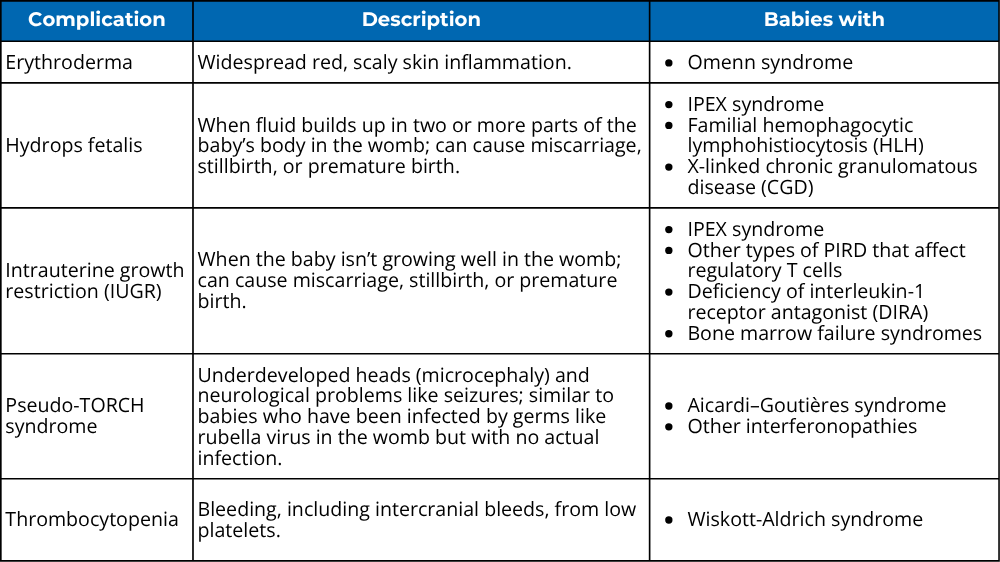
Examples of complications seen in some babies with specific types of PI in the womb or as newborns
Examples of complications seen in some babies with specific types of PI in the womb or as newborns as reported in [19,20].

For newborns of parents with antibody deficiencies, it may take longer for an immunodeficiency to reveal itself. Babies start to naturally make their own IgG when they are 4-6 months old, but they make their own IgA and IgM antibodies at birth since these are not transferred through the placenta in pregnancy. It may take several years, sometimes into early teenage years, to determine whether a child has inherited an antibody deficiency.

Finally, if the mother continues taking immunosuppressants or other medications aside from Ig during pregnancy, these may affect the baby’s development, including their immune system. However, these effects have not been well studied in most cases. If these medications have been continued through pregnancy, the newborn should be monitored for potential complications and have their immune system checked.

In general, breastfeeding is beneficial to mothers and their babies. Breastmilk transfers protective IgA antibodies and has many proteins and factors that support immunity and the baby’s development. All individuals who want to breastfeed, including parents with PI, should try to when possible. However, breastfeeding may not be possible for several reasons. Mothers with PI may be at higher risk of breastfeeding-related infections such as mastitis or abscess [5]. If the mother is on medication that should not be passed on to the baby, it is important to also consider the need to keep the mother’s PI under control.

If there is concern that the baby has PI, breastfeeding is still recommended unless the baby could have SCID or another significant T cell deficiency. In these cases, there is a risk of breast milk transmitting cytomegalovirus (CMV) to the baby. CMV infection can be fatal, lead to permanent organ damage, or increase the risk of HSCT complications, so many immunologists recommend against breastfeeding in this specific situation. However, there is ongoing debate weighing the benefits of breastfeeding against the risks of CMV transmission and strategies for CMV inactivation, such as breast milk pasteurization, have been studied.

Unless a child has a severe T cell deficiency picked up by newborn screening, children born to parents with PI should receive all recommended nonviable vaccines on the standard schedule. In the majority of cases, it is also safe for a child born to parents with PI to receive live, attenuated vaccines like rotavirus or measles-mumps-rubella (MMR). If you are concerned your child may have PI, talk to your immunologist about which vaccines they should or should not receive.

  1. Gundlapalli AV, Scalchunes C, Boyle M, Hill HR. Fertility, pregnancies and outcomes reported by females with common variable immune deficiency and hypogammaglobulinemia: results from an internet-based survey. J Clin Immunol. 2015;35: 125–134. doi:10.1007/s10875-014-0123-3. Available: https://pmc.ncbi.nlm.nih.gov/articles/PMC4352195/ 
  2. Sockel K, Neu A, Goeckenjan M, Ditschkowski M, Hilgendorf I, Kröger N, et al. Hope for motherhood: pregnancy after allogeneic hematopoietic cell transplantation (a national multicenter study). Blood. 2024;144: 1532–1542. doi:10.1182/blood.2024024342. Available: https://pubmed.ncbi.nlm.nih.gov/39007722/ 
  3. Slatter M, Lum SH. Personalized hematopoietic stem cell transplantation for inborn errors of immunity. Front Immunol. 2023;14: 1162605. doi:10.3389/fimmu.2023.1162605. Available: https://pubmed.ncbi.nlm.nih.gov/37090739/ 
  4. Kralickova P, Kurecova B, Andrys C, Krcmova I, Jilek D, Vlkova M, et al. Pregnancy Outcome in Patients with Common Variable Immunodeficiency. J Clin Immunol. 2015;35: 531–537. doi:10.1007/s10875-015-0188-7. Available: https://pubmed.ncbi.nlm.nih.gov/26280892/ 
  5. Mallart E, Françoise U, Driessen M, Blanche S, Lortholary O, Lefort A, et al. Pregnancy in primary immunodeficiency diseases: The PREPI study. J Allergy Clin Immunol. 2023;152: 760–770. doi:10.1016/j.jaci.2023.05.006. Available: https://pubmed.ncbi.nlm.nih.gov/37210041/ 
  6. Atas N, Armagan B, Bodakci E, Satis H, Sari A, Bilge NSY, et al. Familial Mediterranean fever-associated infertility and underlying factors. Clin Rheumatol. 2020;39: 255–261. doi:10.1007/s10067-019-04773-1. Available: https://pubmed.ncbi.nlm.nih.gov/31502094/ 
  7. Zayed A, Nabil H, State O, Badawy A. Subfertility in women with familial Mediterranean fever. J Obstet Gynaecol Res. 2012;38: 1240–1244. doi:10.1111/j.1447-0756.2012.01857.x. Available: https://obgyn.onlinelibrary.wiley.com/doi/10.1111/j.1447-0756.2012.01857.x 
  8. Okuyucu M, Ozdemir AZ, Yalcin Kehribar D, Ozgen M. Ovarian Reserve and Pelvic Ultrasound Assessment in Familial Mediterranean Fever. Cureus. 2022;14: e28027. doi:10.7759/cureus.28027. Available: https://pubmed.ncbi.nlm.nih.gov/36134042/ 
  9. Khizroeva J, Nalli C, Bitsadze V, Lojacono A, Zatti S, Andreoli L, et al. Infertility in women with systemic autoimmune diseases. Best Pract Res Clin Endocrinol Metab. 2019;33: 101369. doi:10.1016/j.beem.2019.101369. Available: https://pubmed.ncbi.nlm.nih.gov/31837981/ 
  10. Carp HJA, Selmi C, Shoenfeld Y. The autoimmune bases of infertility and pregnancy loss. J Autoimmun. 2012;38: J266–74. doi:10.1016/j.jaut.2011.11.016. Available: https://pubmed.ncbi.nlm.nih.gov/22284905/ 
  11. Hansen S, Gardulf A, Andersson E, Lindqvist M, Gustafson R. Women with primary antibody deficiencies requiring IgG replacement therapy: their perception of prenatal care during pregnancy. J Obstet Gynecol Neonatal Nurs. 2004;33: 604–609. doi:10.1177/0884217504269010. Available: https://pubmed.ncbi.nlm.nih.gov/15495706/ 
  12. Saji F, Samejima Y, Kamiura S, Koyama M. Dynamics of immunoglobulins at the feto-maternal interface. Rev Reprod. 1999;4: 81–89. doi:10.1530/ror.0.0040081. Available: https://pubmed.ncbi.nlm.nih.gov/10357095/ 
  13. Immune Modulating Therapies in Pregnancy and Lactation. In: American College of Obstetricians and Gynecologists [Internet]. [cited 7 Sep 2025]. Available: https://www.acog.org/clinical/clinical-guidance/committee-opinion/articles/2019/04/immune-modulating-therapies-in-pregnancy-and-lactation
  14. Brien M-E, Gaudreault V, Hughes K, Hayes DJL, Heazell AEP, Girard S. A Systematic Review of the Safety of Blocking the IL-1 System in Human Pregnancy. J Clin Med. 2021;11. doi:10.3390/jcm11010225. Available: https://pmc.ncbi.nlm.nih.gov/articles/PMC8745599/ 
  15. Maternal Immunization. In: American College of Obstetricians and Gynecologists [Internet]. [cited 28 Jan 2026]. Available: https://www.acog.org/clinical/clinical-guidance/practice-advisory/articles/2022/10/maternal-immunization
  16. Maternal Respiratory Syncytial Virus Vaccination. In: American College of Obstetricians and Gynecologists [Internet]. [cited 28 Jan 2026]. Available: https://www.acog.org/clinical/clinical-guidance/practice-advisory/articles/2023/09/maternal-respiratory-syncytial-virus-vaccination
  17. Friedmann D, Goldacker S, Peter H-H, Warnatz K. Preserved Cellular Immunity Upon Influenza Vaccination in Most Patients with Common Variable Immunodeficiency. J Allergy Clin Immunol Pract. 2020;8: 2332–2340.e5. doi:10.1016/j.jaip.2020.04.019. Available: https://pubmed.ncbi.nlm.nih.gov/32330665/ 
  18. Haidar ZA, Malshe A, McKenna D. Chronic granulomatous disease carrier with recurrent poor obstetric outcome. Obstet Gynecol. 2014;123: 484–486. doi:10.1097/AOG.0000000000000097. Available: https://pubmed.ncbi.nlm.nih.gov/24413246/ 
  19. Carneiro-Sampaio M, de Jesus AA, Bando SY, Moreira-Filho CA. Inborn Errors of Immunity With Fetal or Perinatal Clinical Manifestations. Front Pediatr. 2022;10: 891343. doi:10.3389/fped.2022.891343. Available: https://pmc.ncbi.nlm.nih.gov/articles/PMC9121170/ 
  20. Sero L, Okur N, Yalcin AD, Unal A. Severe antenatal intraventricular hemorrhage in a newborn with WASP pathogenic variant. Eur J Med Genet. 2022;65: 104553. doi:10.1016/j.ejmg.2022.104553. Available: https://pubmed.ncbi.nlm.nih.gov/35777621/ 

This page contains general medical and/or legal information that cannot be applied safely to any individual case. Medical and/or legal knowledge and practice can change rapidly. Therefore, this page should not be used as a substitute for professional medical and/or legal advice. Additionally, links to other resources and websites are shared for informational purposes only and should not be considered an endorsement by the Immune Deficiency Foundation.

Adapted from the IDF Patient & Family Handbook for Primary Immunodeficiency Diseases, Sixth Edition 
Copyright ©2019 by Immune Deficiency Foundation, USA