




Be part of MIRACLE
Recruiting now! MIRACLE is a multi-center research study dedicated to understanding fertility, pregnancy, and reproductive health in individuals with primary immunodeficiency and supported in part by the Immune Deficiency Foundation.

Patient questions drive study of PI, fertility, and pregnancy
July 01, 2026
Read article
Acelpa Health

Global and domestic policy changes boost plasma supply
June 30, 2026
Read article

Patient & Family Handbook for Primary Immunodeficiency, Seventh Edition Preview
June 22, 2026
View PDF

Protecting all Americans from infectious diseases
June 18, 2026
View PDF
Hans D Ochs M.D.
Allergy and immunology; Pediatrics
Adults and pediatrics
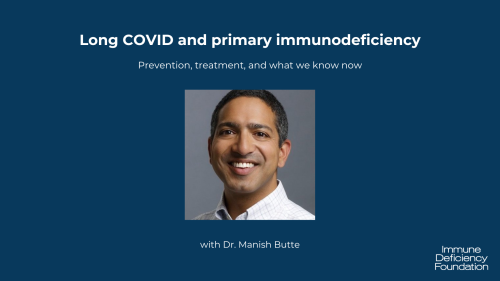
Long COVID and primary immunodeficiency with Dr. Manish Butte
June 16, 2026
Listen to podcast

Appealing health insurance denials requires attention to detail
June 16, 2026
Read article
Search for mental health providers
Use Psychology Today's online search to find mental health providers, including therapists, psychiatrists, treatment centers, and support groups near your home or online. Note that the Immune Deficiency Foundation provides this information for awareness purposes and does not endorse the organization or any of the listed providers.