Woman with WHIM syndrome receives hematopoietic stem cell transplant
August 19, 2026

The more you understand about primary immunodeficiency (PI), the better you can manage it. Learn about PI diagnoses and treatment options.

Living with primary immunodeficiency (PI) can be challenging, but you’re not alone—many people with PI lead full and active lives. With the right support and resources, you can, too.

Be a hero for those with PI. Change lives by promoting primary immunodeficiency (PI) awareness and taking action in your community through advocacy, donating, volunteering, or fundraising.

Whether you’re a clinician, researcher, or an individual with primary immunodeficiency (PI), these resources will help you advance the field. Get details on surveys, grants, and clinical trials.
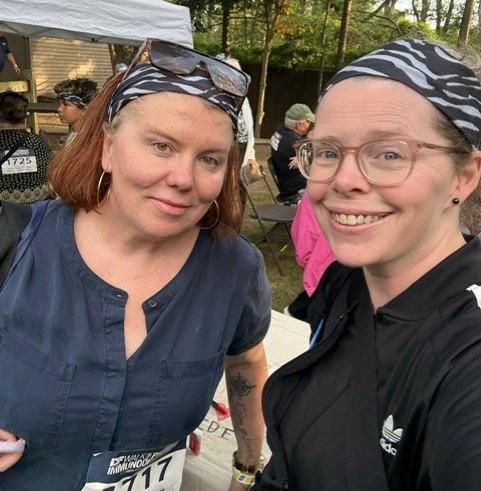
When a biopsy of tumors near Courtney Ampezzan’s liver showed she had cancer, she considered the diagnosis just one more health issue to treat. The 44-year-old lives with WHIM syndrome, which stands for warts, hypogammaglobulinemia, infections, and myelokathexis.
Hypogammaglobulinemia means a person has low levels of antibodies, while myelokathexis causes low white blood cell counts and frequent infections.
Along with WHIM, she has Evans syndrome, a rare autoimmune blood disorder that causes a high risk of infection and fatigue.
“A lot of times when people get a cancer diagnosis, they're living their life normal, and then it's like, whoa, world shift, whereas I've just been sick the whole time. So, I thought, ‘OK, this is another thing to deal with,’” said Ampezzan, who chose to treat her cancer with a hematopoietic stem cell transplant (HSCT).
Ampezzan received the formal diagnosis of Stage 3 marginal zone lymphoma (MZL) in 2024. Because she is highly allergic to rituximab, a monoclonal antibody that is the standard treatment for Stage 3 MZL, doctors tried shrinking the tumors with radiation as a stop gap measure. The radiation proved successful, but it wasn’t a cure.
For the long-term, Ampezzan had two choices—monitor the tumor growth and treat symptoms or undergo a HSCT, also known as bone marrow transplant (BMT). In HSCT, doctors transfer donor stem cells to someone whose immune system is failing. If the HSCT is successful, the donor stem cells take root and multiply, producing all of the cells that help build a functioning immune system.
Treating cancer symptoms meant a declining quality of life with no possibility of improvement, considered Ampezzan. On the other hand, there was limited data on outcomes of HSCT for WHIM patients. In a multicenter study of seven children with WHIM who had HSCT, one child developed graft versus host disease, a complication where donor cells attack the recipient's tissue, and died of infectious complications after a third HSCT. Compared to the study participants, Ampezzan had several factors stacked against her including her age, active cancer, and Evans syndrome.
“It was a real gamble. But it was either the transplant or nothing,” said Ampezzan. “I was taking pain meds almost daily and just exhausted and miserable.”
Ampezzan chose HSCT and the search for suitable stem cell donors revealed that her older sister was a full stem cell match.
“That was pretty incredible. I was out in California with her when she found out that she was my match, so that was really special,” said Ampezzan.
Ampezzan had HSCT in December 2025 and, less than a year later, she is recovering well. She experienced fever and chills during her six-week hospital stay, but the hardest part of recovery was living in isolation at home for months, with only limited contact with her husband and mother. Now that Ampezzan has completed isolation requirements, she feels healthy enough to take a vacation.
Ampezzan credits her 5-pound toy poodle Paco, a rescue from Puerto Rico, with providing her comfort during her recovery. Paco has missing teeth, and a broken shoulder and hip. When she first got him, people told Ampezzan she should give the dog back, but she said, “No, he’s cool.”
“I ended up breaking the rules and had Paco in with me during isolation. I was like ‘I’m willing to take the risk because that is what’s important to my mental health,’” said Ampezzan.
Navigating her life the way she wants has always been Ampezzan’s approach.
She grew up in a small town in Maine, attended public school, and earned a bachelor’s degree and master’s in public health from the University of Southern Maine. Everyone in her town knew she had PI and took special care not to visit her if they were sick. Her family took some precautions but never treated her like she was “in a bubble,” said Ampezzan.
Born with an ear infection and originally diagnosed with common variable immunodeficiency (CVID), Ampezzan lived with constant illness. Even though she received intravenous immunoglobulin (IVIG) treatment therapy, she still had multiple ear infections, sinus infections, pneumonia, gastrointestinal problems, skin cancers, and warts. Hospital stays were frequent.
“I don't think I've ever really given myself a choice as to not to keep going, not participating, not doing, because with chronic illness, there's so many times that I'm sidelined and there's nothing that I can do with it. So I'm always a proponent of saying ‘yes,’ and joining, and when I'm able, doing all of the things I am able to do, because I know that tomorrow's not promised. I know that tomorrow I could get sick,” said Ampezzan.
After undergoing genetic testing in 2019, Ampezzan learned she had WHIM syndrome, not CVID. She tried new medicine through clinical trials at the National Institutes of Health (NIH) and Johns Hopkins University, but the side effects caused her to stop participation in the trials.
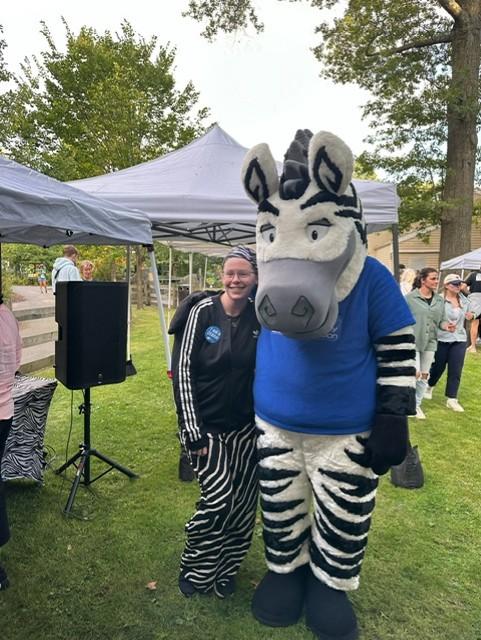
Ampezzan got involved with the Immune Deficiency Foundation several years ago and has participated in Advocacy Day and Walk for PI in Boston, which she’ll do again this walk season.
“I'm looking forward to bumping it up this year. I have a few more friends joining me this year, so that will be good,” she said.
The key to living with a chronic illness like PI is to persevere through the tough days and appreciate the days when you feel good and healthy, said Ampezzan.
“The biggest tool that I have is the ability to see a situation honestly and objectively. I can say, ‘This is terrible, and I am miserable, and this is hard.’ But, I can also see the days when this is good, this is great,” said Ampezzan.
“It's not promised that it's going to get better. Just keep going. You need to really be in the present moment and realize your feelings and feel them and know they're valid. I think that’s important.”
She relies on her family, friends, and church community to sustain her.
“Everyone at my church has really embraced me and supported me as a person, without pity, and as a peer, which really makes a difference. To find a place where you're a person before you're a patient is really nice,” said Ampezzan.

Receive news and helpful resources to your cell phone or inbox. You can change or cancel your subscription at any time.