
Retired nurse waited decades for combined immunodeficiency diagnosis
September 14, 2026

The more you understand about primary immunodeficiency (PI), the better you can manage it. Learn about PI diagnoses and treatment options.

Living with primary immunodeficiency (PI) can be challenging, but you’re not alone—many people with PI lead full and active lives. With the right support and resources, you can, too.

Be a hero for those with PI. Change lives by promoting primary immunodeficiency (PI) awareness and taking action in your community through advocacy, donating, volunteering, or fundraising.

Whether you’re a clinician, researcher, or an individual with primary immunodeficiency (PI), these resources will help you advance the field. Get details on surveys, grants, and clinical trials.
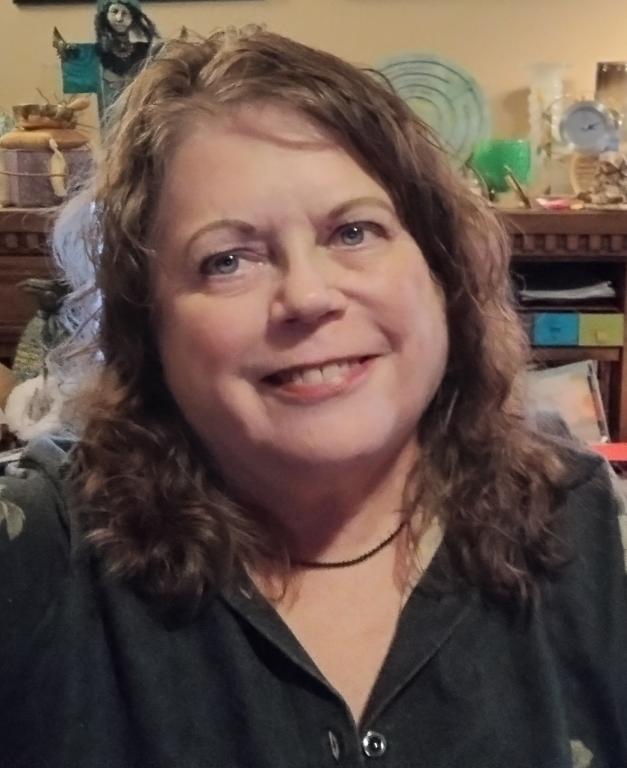
In her 30s, Donna Hawkins started having several sinus infections every year, and doctors couldn’t determine why. Antibiotics only kept the infections at bay for a few months at a time. Three nasal surgeries didn’t help either.
Although an allergist told her she was “just sensitive to particles in the air,” he did diagnose her with asthma. She used inhalers for decades, but her symptoms became so severe that the allergist prescribed biologic therapy, administered through injection. The first one didn’t work and when the allergist tested her blood to try a different one, a low count of infection-fighting cells prompted a referral to an immunologist.
In 2021, at 66, Hawkins finally learned that she had a combined immunodeficiency (CID). CIDs are a group of over 130 rare primary immunodeficiencies (PI). They are called “combined” because they affect both T cells and B cells and can cause infections ranging from mild to life-threatening.
“The whole zebra thing is true. Doctors don't look for zebras, they look for the horses and they poo-poo you and your symptoms, especially if you're a woman. You have to be a very hard advocate for yourself,” said Hawkins, a 71-year-old retired geriatric nurse.
Intravenous immunoglobulin (IVIG) replacement therapy and preventative antibiotics reduced her infections, and inhalers and nebulizers made breathing easier. Since the diagnosis though, Hawkins has developed bronchiectasis, a chronic condition that causes permanent widening of the airways and makes the risk of pneumonia even higher. She also has numbness and pain in her feet from neuropathy and uses a cane outside of the home. A degenerative back condition has required multiple surgeries.
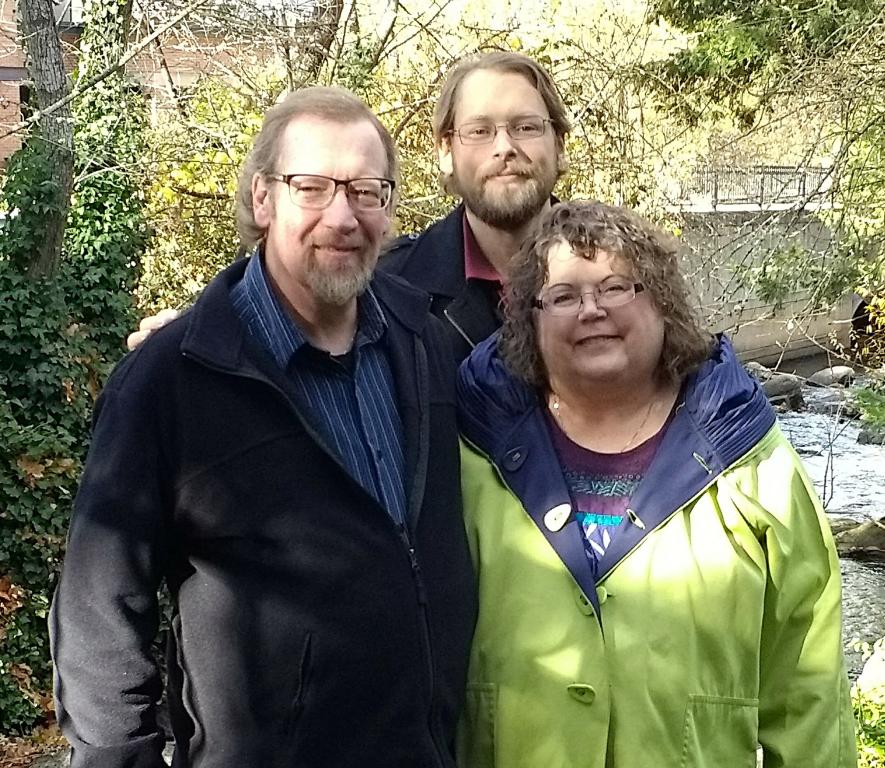
Before Hawkins’ diagnosis and the pandemic, she and her husband, Jim, a retired postal worker, traveled extensively. They visited the highest elevation in dozens of different states as members of the Highpointers Club. They also went on cruises each year to locations like South America and the Baltic Sea.
In recent years, the couple has scaled back their travels. Still, they have taken several trips to visit family, celebrated Hawkins’ 70th birthday with a 28-day Norwegian cruise, and visited West Virginia’s highest point this past summer.
“I don’t want to live the rest of my life not doing anything. I know that part of not traveling causes me to be depressed,” said Hawkins.
Hawkins chooses her daily trips out of the house carefully. Her husband grocery shops, the couple and their son eat at restaurants that offer social distancing, and she wears a mask in public.
Most of Hawkins’ socializing takes place virtually. She attends church, meets with friends and family, and participates in a philanthropic group, all online. She also leads an Immune Deficiency Foundation Get Connected Group and attends foundation webinars.

Hawkins has even figured out a way to transfer her role as a labyrinth facilitator from in-person to virtual. A labyrinth facilitator is someone who leads a group on a spiritual and meditative walk of prayer and contemplation. She trained for the role in 2016 after she retired and led labyrinth walks at her church.
The important thing to know about a labyrinth, said Hawkins, is that although it is a circuitous path within a circle that has many turns and switches, there are no dead-ends like a maze. By following the turns, a walker will easily get to the center of the circle and back out again.
Hawkins recalls one walk she did on a path lined with stones. She kept tripping on the stones and putting them back. That didn’t bother her too much because, by the time she got to the center of the labyrinth, the sunset over the nearby mountain made the golden rod glow brilliant yellow, a breeze cooled her off, and a cello played softly in the background.
“I thought to myself, ‘This is a perfect moment.’ And then I thought that my walk in, stumbling over everything, was really about life. You stumble over things, you have to make things right, and then you keep going. And every once in a while, you get a perfect moment,” said Hawkins.
“The idea behind the labyrinth is that everything that happens on the path is a metaphor for life. Sometimes nothing happens, and sometimes you can have a profound experience.”

Hawkins now leads virtual labyrinth walks where each participant uses a handheld wooden labyrinth to trace their fingers along the path. After participants complete the journey, Hawkins leads the group in a spiritual reflection discussion. She’s never missed a week as a virtual labyrinth leader except during her time in the hospital.
“I think it helps my mind be calm and reflect that, it is what it is. It becomes what I make it. And what I'm making of it is this is something I do that helps people in the church, which helps me. I have a whole list of people I call labyrinth enthusiasts, who attend the online walks. And that in itself gives me purpose,” said Hawkins.

Receive news and helpful resources to your cell phone or inbox. You can change or cancel your subscription at any time.