Three generations navigate common variable immune deficiency
November 19, 2026

The more you understand about primary immunodeficiency (PI), the better you can manage it. Learn about PI diagnoses and treatment options.

Living with primary immunodeficiency (PI) can be challenging, but you’re not alone—many people with PI lead full and active lives. With the right support and resources, you can, too.

Be a hero for those with PI. Change lives by promoting primary immunodeficiency (PI) awareness and taking action in your community through advocacy, donating, volunteering, or fundraising.

Whether you’re a clinician, researcher, or an individual with primary immunodeficiency (PI), these resources will help you advance the field. Get details on surveys, grants, and clinical trials.
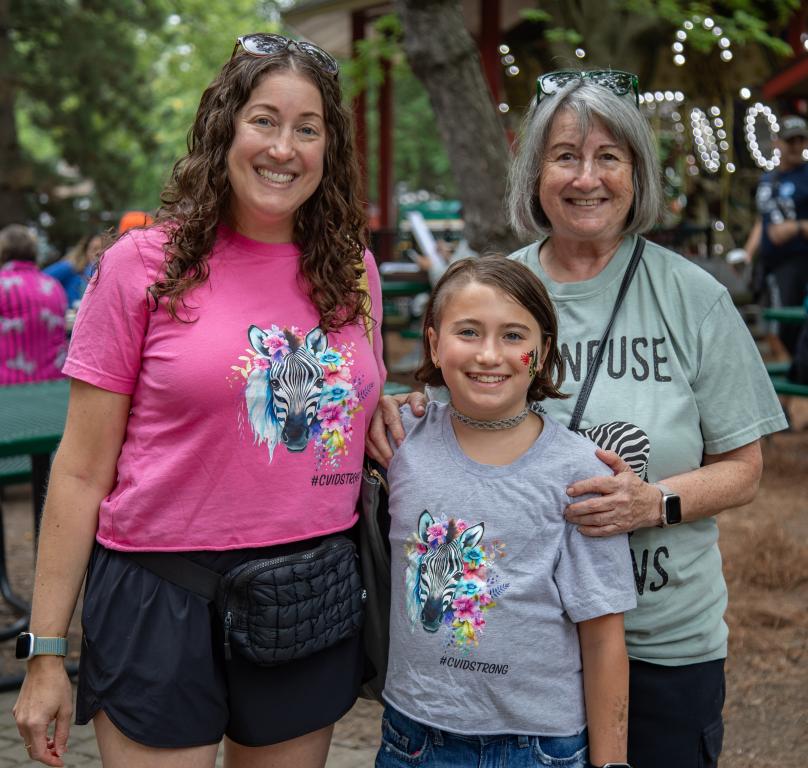
Debra Lewis lived for almost seven decades with low antibodies and frequent infections, only receiving treatment briefly during a clinical trial. An immunologist finally diagnosed her with common variable immune deficiency (CVID) two years ago at 69. Within several months, her granddaughter, and then her daughter, also received CVID diagnoses. Learning her granddaughter and daughter have CVID saddened Lewis but also confirmed there was a medical reason for a lifetime of repeated illnesses.
“I think my family understands me better and what I was going through. Grandma was always sick. I’m not sure they realized how scared I was when antibiotics didn’t work and that I hoarded the ones that I did just in case I got sick,” said Lewis.
The three generations—Lewis, 71, Deana Kaplan, 41, and Sylvie Kaplan, 11—drove the 40 minutes from their home in Illinois to the Milwaukee Walk & Community Days event this past August. They wanted to know more about primary immunodeficiency (PI) and connect with other members of the PI community.
“I met someone there who was about my age, and I was talking to her, and we had the same history—we had gotten sick a lot and were diagnosed with hypogammaglobulinemia [low antibodies] but didn't have treatments until, all of a sudden, we did. So, it was almost like we had the same history. It was so nice to talk to somebody that was like me,” said Lewis.
Born in 1955, Lewis said she was always sick with colds, sinus infections, and earaches. Her parents blamed it on the cold weather and not dressing warm enough. Doctors diagnosed Lewis with hypogammaglobulinemia, or low antibodies, in her 20s. She received intravenous immunoglobulin (IVIG) replacement therapy treatment at 28 for two years through a clinical trial. When the trial ended, she couldn’t afford the treatment.
While she raised two children and returned to work, Lewis lived with sinus infections, colds, and bouts of pneumonia. She’d take two, sometimes three, rounds of antibiotics several times a year to get through the infections.
In 2024, her new immunologist diagnosed her with CVID and explained that Medicare would cover the cost of IVIG. Now, she only needs antibiotics for infections about twice a year, and she can shake a cold.
As Lewis made progress on treating her PI, her granddaughter Sylvie started her journey to diagnosis. At Sylvie’s annual check-up, her pediatrician flagged the then 9-year-old for slow growth. Low height and weight combined with a history of ear infections requiring ear tubes, sinus infections, removal of adenoid glands, and a grandmother with low antibodies, led to an immunologist referral.
Immune system tests along with genetic testing showed Sylvie has CVID too. Insurance denied coverage of IVIG treatment for Sylvie, but her family appealed the decision and gained approval. She started on IVIG in July 2025. Sylvie’s mom’s CIVD diagnosis came next, in February 2026. Currently, both mother and daughter use subcutaneous immunoglobulin (SCIG) replacement therapy but plan to switch back to IVIG.
“I’m glad that Deana and Sylvie were diagnosed early enough so that they won’t have to go through a lifetime of what I went through,” said Lewis.
The family discovered the Immune Deficiency Foundation when Sylvie’s doctor gave them chapters from the “Patient and Family Handbook for Primary Immunodeficiency” to read about CVID and other PI-related topics.
“My husband and I wanted to understand what CVID was, what this diagnosis meant, what treatment would mean, and what we would be living with going forward,” said Kaplan.
Kaplan also joined the foundation’s CVID Facebook group to meet other people living with the diagnosis, ask questions, and find support.
“That was really helpful because I was able to ask for some insights as a parent, because we made the decisions regarding treatment, for example, and we knew what we were going to do, but we wanted to know what to expect in getting ready for that first infusion,” she said.
The experience also allowed Sylvie to befriend another young person diagnosed with CVID who she could talk to about things like treatment.
“I texted my friend the day I was going to do SCIG and I asked her, ‘How did this feel? Did it hurt?’ She said it just felt ‘weird’ and it didn’t hurt as much, but when I did it in my stomach, it hurt a lot. I still hate SCIG. But it was nice to have somebody close to my age to talk to,” said Sylvie.
Kaplan, who had sinus and ear infections requiring tubes, her tonsils and adenoids removed, and pneumonia, never prioritized her health as a busy mom. She sometimes visited health clinics other than her primary care provider, so there was no consistent record of her infections.
After Sylvie’s diagnosis, her medical history warranted testing for PI. The doctor diagnosed Kaplan as a carrier of CVID through genetic testing but, because of her symptoms and other test results, prescribed Ig replacement therapy.
"The past few years have felt like a wild ride from Sylvie's diagnosis and starting treatment to then navigating everything in my own journey. It's had its ups and downs, but finding community, and, more importantly, resources has been incredibly helpful along the way,” said Kaplan.
"I would urge anyone starting this journey to ask lots of questions, both of doctors but also to those within the CVID community. I didn't feel alone when we were getting Sylvie's diagnosis. And that experience helped me better understand what to ask and how to advocate for myself and my family."

Receive news and helpful resources to your cell phone or inbox. You can change or cancel your subscription at any time.