Consulting medical director Dr. Mark Ballow steps down
May 26, 2026

The more you understand about primary immunodeficiency (PI), the better you can manage it. Learn about PI diagnoses and treatment options.

Living with primary immunodeficiency (PI) can be challenging, but you’re not alone—many people with PI lead full and active lives. With the right support and resources, you can, too.

Be a hero for those with PI. Change lives by promoting primary immunodeficiency (PI) awareness and taking action in your community through advocacy, donating, volunteering, or fundraising.

Whether you’re a clinician, researcher, or an individual with primary immunodeficiency (PI), these resources will help you advance the field. Get details on surveys, grants, and clinical trials.
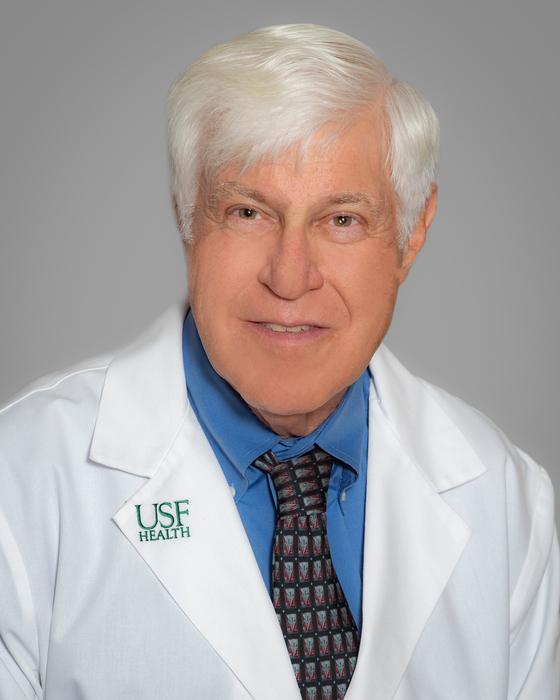
Forty-five years ago, immunoglobulin (Ig) replacement therapy was administered intramuscularly to patients. In those days, recalls Dr. Mark Ballow, patients didn’t receive the treatment in their veins or under their skin—they endured painful shots into the muscle that caused side effects like severe headaches, chills, and nausea.
Researchers made progress with the administration of Ig when the Food and Drug Administration (FDA) approved an intravenous (IV) option in the early 1980s, but the product continued to be made by mixing Ig in powdered form with a liquid. The real breakthrough came in 2005 when the FDA approved the first ready-to-use liquid IVIG formulation specifically for primary immunodeficiency (PI). It had substantially fewer side effects.
“The highpoint of treating patients with PI was the progress of Ig replacement therapy. The Ig products became much improved as the new products came out,” said Ballow, who contributed to over a dozen Ig therapy clinical trials during his career as an immunologist specializing in PI. “I was fortunate enough to see that transition from a powder to liquids.”
Ballow recently stepped down as the Immune Deficiency Foundation’s consulting medical director, a position he held since 2017. Before serving as medical director, he served on the Medical Advisory Committee, starting in 2010.
An accomplished clinician, researcher, and professor who has published more than 250 peer-reviewed papers and contributed to 60 medical book chapters, Ballow shared his expertise on several projects. He published white papers expressing the importance of health insurance coverage for Ig therapy, presented at foundation conferences and webinars, and managed the patient question portal, now known as Ask IDF.
The contribution of which he is most proud is his role as co-editor of the "Patient & Family Handbook for Primary Immunodeficiency, Sixth Edition." The handbook contains information about different types of PI, and their diagnosis and treatment.
“It took a lot of work to put that together. The handbook is helpful for patients to learn about their diagnosis and they can download specific chapters and give them to their doctors, who may not be familiar with certain PIs,” said Ballow.
Ballow also served as a steady presence for the community during the COVID-19 pandemic. He provided regular updates on the spread of COVID-19 through webinars, sharing news about researchers’ understanding of the virus, its treatments, and how it affects those with PI.
“Giving advice to patients about COVID was an important and active time for me at the Immune Deficiency Foundation. I think everyone was apprehensive but particularly patients who have immune deficiency,” said Ballow. “I gave many presentations on COVID, and then the vaccine came out and there were questions about the vaccine, which is not a live vaccine, and whether patients should receive the vaccine and whether they could make antibodies to the COVID vaccine.”
During the pandemic, he also helped educate and inform the community about critical steps outlined by the Centers for Disease Control and Prevention (CDC) to take for protection, like mask-wearing, keeping children home from school, avoiding public places like restaurants and movie theaters, and social distancing with family members and friends.
“All of those questions came up with patients and caretakers, and the foundation played a critical role in helping them because where else were they going to turn to?” said Ballow. “There was still a lot of information we didn’t know and understand about COVID-19. COVID-19, caused by SARS-CoV-2, was an evolving science.”
Born in Pennsylvania in 1943, Ballow built a robust career in medicine as a pediatric immunologist. A paper he published on the complement system while spending his fourth year of medical school at the Scripps Research Institute inspired his direction.
“That really kind of hooked me into immunology,” said Ballow, who earned his medical degree from the University of Chicago School of Medicine.
Another paper he published on the role of kidney transplantation in the military, allowed him to defer his military service during the Vietnam War. He finished his pediatric training at Yale New Haven Hospital, and immunology at the University of Minnesota. There, he worked under the supervision of Dr. Robert Good, who performed the first successful hematopoietic stem cell transplant (HSCT), also known as bone marrow transplant (BMT), in a child with severe combined immunodeficiency (SCID) in 1968.
“But the Army didn’t forget me,” said Ballow, who, after finishing his fellowship in immunology at the University of Minnesota in 1973, received a letter requiring him to serve in the U.S. Army.
In an effort to continue in the field of immunology, Ballow set up interviews at the Walter Reed National Military Medical Center in Washington, D.C in various departments engaged in immunology. This led to a position running an immunology lab in the allergy and immunology department. There, he met pioneers in the PI and immunology research field, including the late Dr. Michael Blaese, who developed gene therapy for SCID and served as director of the National Human Genome Research Institute (NHGRI) at the National Institutes of Health (NIH). Blaese also supported the foundation in the early days of its operations by speaking at conferences and offering medical guidance, and it was Blaese who brought Ballow into the fold with the Immune Deficiency Foundation many years later.
“It was a great experience,” said Ballow of his time at Walter Reed.
In 1975, Ballow joined the faculty at the recently opened University of Connecticut (UConn) Medical School, specializing in pediatrics and immunology. He found treating children more fulfilling than adults.
“I had an easier time and more fun communicating with children and parents than I did adults. With regard to PI, we could identify and intervene with therapy at an earlier time in their life,” said Ballow.
After 13 years at UConn, where he rose from assistant professor to full professor, Ballow took a position as a division chief of allergy/immunology and pediatric rheumatology at the State University of New York at Buffalo (SUNY Buffalo) and became medical director of the immunology laboratory at Children’s Hospital of Buffalo. He also became more active in the American Academy of Allergy, Asthma, and Immunology, where he eventually became president in 2010.
During his quarter century at SUNY Buffalo, he researched the role vitamin A could play in boosting the humoral immune systems of premature babies and conducted clinical trials on Ig therapy.
“I think I was involved in a clinical trial with almost every new Ig that came along,” said Ballow.
In 2012, Ballow headed to Sarasota, Fla., to retire but within a year he was working again. Recognizing Ballow’s talents, the University of South Florida Morsani College of Medicine department chair of pediatrics recruited Ballow to join the faculty in the allergy/immunology division, and serve as a clinician treating both pediatric and adult patients. At 82, Ballow continues to make the drive to St. Petersburgh, Fla., on Mondays to supervise clinicians during their continued training.
When he isn’t working, Ballow enjoys spending time with his wife of 59 years and family. He has three children—a son who is a lieutenant colonel in the Army Special Forces, a daughter who is a pediatric cardiologist at Children’s National Hospital, and another daughter who is an engineer with Duke Energy—and six grandchildren. Recreation time includes gardening, playing golf, and tennis.
Ballow reflects fondly on his time with an organization that he said is unique in the PI space because it continues to evolve to meet the needs of the community and always puts patients first.
“The Immune Deficiency Foundation is patient-centered and it’s become very successful and broadened its services, but the focus remains the same—patient education and patient support,” said Ballow.

Receive news and helpful resources to your cell phone or inbox. You can change or cancel your subscription at any time.